Will Avian Flu be the Next Pandemic?
Ok, so I am focusing on health issues lately. That's because I have an interest in health. Get over it or read something else.
Every year about this time we start to hear all kinds of alarmist reports about the next pandemic of flu that is about to hit and decimate the world's population and cause havoc in the chaos that already exists. I don't doubt that flu poses a threat to those who have a suppressed immune system due to malnutrition, improper eating habits, lack of exercise, lack of sanitary conditions, etc. However the media and the flu flunkeys from Big Pharma like to hyperventilate about the dangers of flu, especially when they look at the big $$ to be made from getting everyone on the flu vaccine.
I am pasting a post complete with references from Sheri Tenpenny below. Read it and then re-evaluate what you have been hearing in the mainstream news. Then make a decision as to whether or not it is worth getting that flu shot. Incidentally, though this is purely anecdotal, a lot of the people that I know who get the flu shot end up getting sick with flu-like symptoms soon afterwards. Mere coincidence?
http://www.redflagsdaily.com/tenpenny/2005_nov02.php
Eliminating Bird Flu Fears:
10 Facts You Need To Know
By Red Flags Columnist, Sherri Tenpenny, DO
The concerns about avian influenza, a.k.a. bird flu, seem to have the entire world in an uproar. More than 150 million domestic ducks and chickens have been sacrificed throughout Southeast Asia, China, Russia and Eastern Europe in an attempt to stop the spread of the virus. Billions of dollars are being allocated to the development of a new “pandemic” vaccine and the stockpiling of two drugs, Tamiflu and Relenza, which are touted to “treat” the infection. The hysteria in the United States has risen to the point where President George Bush allocated resources toward preparing to use the military to enforce quarantines and perhaps even to enforce mandatory vaccination.
What is really going on? Is a pandemic going to develop that will stop all commerce for months and put an end to Western civilization as we know it? (1) What tactics are being used to scare us into believing these measures are necessary?
A level-headed examination of 10 important facts shows that the prevailing alarmist point of view is inaccurate, irresponsible and self-serving.
1. The death rate from H5N1 infection is highly overstated.
Between Dec. 26, 2003 and Oct. 24, 2005, there were 121 confirmed H5N1 infections and, of those, 62 have reportedly died. That makes the “apparent” death rate just over 51 percent, ranking this infection among the most deadly on record.
However, thousands of mild and asymptomatic cases are going undetected as detailed by Dick Thompson, a spokesperson for the World Health Organization (WHO). In an interview granted to CIDRAP (Center for Infectious Disease Research and Policy) News on March 9, 2005, Thompson said that the case-fatality rate had been overstated. Documented cases were those where the patients were sick enough to seek medical care in a hospital and, predictably, they had very poor outcomes. He concluded, “Surely others were infected and either not getting sick or not getting sick enough to seek treatment at a hospital. Factoring those into the CFR [case-fatality rate] has been impossible. We simply don't know the denominator.” (2)
To illustrate, if 62 people died, but 10,000 had actually been infected, the death rate would be 0.62 percent, essentially insignificant. Therefore, without knowing how many are infected, the death rate is being highly inflated
2. The virus has barely infected humans; significantly, there has been no sustained person-to-person transmission of the infection.
Very few cases of severe human infection by H5N1 have occurred. An intensified surveillance of patients in Southeast Asia has led to the discovery of mild cases, more infections in older adults, and an increased number of “clusters cases” among family members, suggesting that “the local virus strains may be adapting to humans.” In other words, humans are developing their own innate resistance to the virus. (3)
In addition, all cases have occurred via animal-to-human transmission, and there is documentation of only one confirmed case of human-to-human transmission. Without sustained transmission between humans — meaning one person spreads it to another and another, and so on — there can be no pandemic. The “hype” that, sooner or later, the H5N1 strain will mutate into a strain that can be easily passed between humans is completely unsubstantiated. Whether this will happen is nothing more than a guess because:
3. We have had “potential pandemics” before.
In February 2003, Thompson of the WHO revealed that “there have been a half dozen pandemic ‘false alarms’ in the last 30 years.” A false alarm is an outbreak where a virus has jumped the species barrier, but has been confined to one or two people and has not been lethal. (4)
What makes H5N1 particularly significant? Why is this virus gaining the attention of the world? The attention may be due not to its potentially lethal effects on humans, but rather to the deaths of millions of domestic birds, infected or not. Could this be about commerce? Is this a global economic crisis in the making, but not a global health crisis?
4. Tamiflu does not treat the flu and it is unknown if it will stop the spread of the infection.
Clinical trials with Tamiflu have shown that the drug reduces acute symptoms of flu by a maximum of 2.5 days, depending on the subgroup analyzed. That’s it: 2.5 days. In addition, viral shedding in nasal secretions was reduced after Tamiflu had been administered. Although this would presumably lessen the exposure risk for close contacts, this theory has not been tested. (5)
5. The virus is already becoming resistant to Tamiflu.
Recent human isolates are fully resistant to older, less expensive influenza drugs, amantadine and rimantadine. (6) In addition, a high-level of resistance to Tamiflu has been detected in up to 16 percent of children with human influenza A (H1N1). Not surprisingly, this resistant variant has been detected recently in several patients with H5N1 infection who were treated with Tamiflu. (7)
In addition, nearly seven percent of people who are prescribed Tamiflu can’t tolerate the side effect: persistent nausea. So, at nearly $100 for a course of treatment, you might want to save your money and spend it on saline nasal spray, which is at least as effective. (8)
6. The other newly recommended drug, Relenza, isn’t much better.
Relenza is a powder, which is inhaled twice a day for five days from a breath-activated plastic device called a Diskhaler. Some patients have had bronchospasm (wheezing) or serious breathing problems when they used Relenza.
In fact, in January 2000, the FDA issued a warning about prescribing Relenza after some users reported deterioration of respiratory function following its inhalation. Particular concern was expressed for patients with underlying asthma or emphysema. The FDA stated that “an acute decline in respiratory function may contribute to a fatal outcome in patients with a complicated pre-existing medical history and pulmonary compromise.” (9)
7. The “seed virus” produced by the WHO and given to the vaccine manufacturers may not be the correct virus.
In February 2005, the WHO developed several H5N1 prototype vaccine strains in accordance with the requirements of national and international pharmaceutical licensing agencies for influenza vaccine production. These H5N1 prototype strains were made available to institutions and companies working to develop the pandemic vaccines. (10)
By October 2005, the WHO had evidence that the virus had evolved and is now “genetically distinguishable” — i.e., different — from the prototype strain selected for vaccine development. In what can only be described as a case study in bureaucratic thinking, the WHO, in spite of the new information, does not recommend changing the strain.
In any case, it will take another 4 to 18 months before the vaccine is ready for mass dissemination. As Nancy Cox, director of the influenza branch at the CDC (Centers for Disease Control and Prevention) stated, "If we don't get a good match, the vaccine will be less effective, producing illness, hospitalizations and death." (11) By that time, will the “vaccine virus” show any resemblance to the “pandemic virus” thought to be in circulation then? If it is appreciably different, how can mandatory vaccination be justified?
8. Who benefits the most? Big Pharma.
Millions in grants and tax incentives to develop new products. Guaranteed purchase orders from governments here and abroad. Complete product liability protection. It doesn’t get any better for a product manufacturer, and in this case, all the benefits go to Chiron, Sanofi-Aventis and GlaxoSmithKline, the “big boys” in the market for making the new vaccine. With a global population of more than six billion, the market share is large enough to get their attention. Add in the financial incentives, and the developers are off and running.
To add an additional layer of protection, on Oct. 18, 2005, Senator Bill Frist (R-TN) and Senator Richard Burr (R-NC) introduced and fast-tracked a bill that would create a new agency within the Department of Health and Human Services (HHS) called the Biomedical Advanced Research and Development Agency (BARDA). This new agency would help “spur private industry to develop and manufacture medical countermeasures for bioterrorism agents and natural outbreaks.”
However, the dark side of S.1873, the Biodefense and Pandemic Vaccine and Drug Development Act of 2005, is that it would exempt the pharmaceutical industry not only from liability, but would also ensure that no one would have access to data documenting medical failures or catastrophes. BARDA would be exempt from access by the Freedom of Information Act, the Federal Advisory Committee Act and parts of the Federal Acquisition Regulations. It would act in total secrecy and protection from the general public by the federal government. (12)
Fortunately, the scientific community is standing up loudly against the formation of the new agency. The Federation of American Societies for Experimental Biology, a coalition of independent member societies and scientists, which has historically shown particular interest in public policy issues relating to science, weighed in to voice several concerns. In a letter to Chairman Burr, dated Oct. 18, 2005, the coalition’s president, Bruce Bistrian, MD, PhD, wrote the following:
“On behalf of the Federation of American Societies for Experimental Biology (FASEB), a coalition of 23 scientific societies representing more than 65,000 scientists, I am writing to express our reservations over your recent proposal to create the Biomedical Advanced Research and Development Agency (BARDA)….”
“FASEB is troubled over the impact this new agency might have on existing programs at the National Institutes of Health (NIH) and Centers for Disease Control, particularly in an era of limited funding for domestic discretionary spending. NIH and the dozens of universities and research institutions around the country where NIH-supported research is performed already have the scientific expertise and research infrastructure in place to carry out the bioterrorism research that our nation needs. Our concern is that BARDA would duplicate, constrain or even eliminate these programs. Moreover, while implementing a ‘top-down’ approach to research, as described in the BARDA proposal, may be suitable for the manufacturing stage of development, we do not believe it is an appropriate substitute for hypothesis-driven basic research, which has historically led to the most important advances in biomedical science.” (Emphasis added). (13)
Hopefully, other organizations and the general public will follow suit and fight to oppose this bill.
9. Who has the most to lose? The citizens of the world, particularly U.S. citizens.
The Global Pandemic Preparedness Plan is nothing more than a power grab for the government, the United Nations (UN) and the WHO. Buried deep within the WHO’s plan, here is a glimpse of the ominous plans in preparation for “affected countries:”
Activate procedures to obtain additional resources; consider invoking emergency powers.
Activate overarching national command and control of response activities, either by formal means or de facto (close oversight of district and local activities).
Deploy operational response teams across all relevant sectors. (14)
Global control and UN peacekeepers may be coming soon to a neighborhood near you.
10. What you need to do
According to the UN’s Food and Agriculture Organization (FAO), the avian influenza virus is easier to destroy than other influenza viruses. It appears that it is very sensitive to detergents — i.e., soap — which destroy the outer fat-containing layer of the virus. This layer is needed to enter cells of animals and, therefore, destroys the infectivity. In other words, when you have been in public places, use soap to wash your hands before touching your face. (15)
Congress is attempting to shield Pharma completely from responsibility and then hide the resulting problems through the fast-tracking of S.1873. Contact your senators immediately to try to stop the passage of this bill. For quick access to the bill, and what to do, go to www.nvic.org and click on “Senate Alert” at the top of the page.
Don’t get caught up in the hype. For daily updates and developing action plans, go to www.BirdFluHype.com and stay informed.
Preparing for the Next Pandemic by Michael T. Osterholm. Foreign Affairs, July/August 2005. www.foreignaffairs.org)
Relatives of avian flu patients have asymptomatic cases, by Robert Roos. CIDRAP News. March 9, 2005. http://www.cidrap.umn.edu/cidrap/content/influenza/avianflu/news/mar0905asymp.html
Beigel, JH. Avian influenza A (H5N1) infection in humans. N Engl J Med. Sept. 29, 2005;353(13):1374-85.
The Scientist-Online www.The-Scientist.com/news/20030227/04
Stiger, G. The treatment of influenza with antiviral drugs. CMAJ. Jan. 7, 2003;168(1):49-56. PMID: 12515786
Li KS, Guan Y, Wang J, et al. Genesis of a highly pathogenic and potentially pandemic H5N1 influenza virus in eastern Asia. Nature 2004;430:209-13.
Avian Flu Virus Showing Resistance to Tamiflu by Katrina Woznicki. MedPageToday. Sept. 30, 2005. http://www.medpagetoday.com/PublicHealthPolicy/PublicHealth/tb/1850
Spray used for asthma may help slow spread of infections. Asso. Press. 11-29-04. http://www.ajc.com/news/content/health/1104/30spray.html
FDA Public Health Advisory. Jan. 12, 2000. http://www.fda.gov/cder/drug/advisory/influenza.htm
WHO. Recommended H5N1 prototype strains for influenza pandemic vaccine development remain the same. Oct. 28, 2005. http://www.who.int/csr/disease/avian_influenza/statement_2005_10_28/en/print.html
Breakdowns Mar Flu Shot Program Production, distribution delays raise fears of nation vulnerable to epidemic. SF Chronicle. Sunday, Feb. 25, 2001. http://www.sfgate.com/cgi-bin/article.cgi?file=/chronicle/archive/2001/02/25/MN12226.DTL
For more information and complete version of SB 1873, go to www.NVIC.org
FASEB letter. http://www.faseb.org/opa/PDF/Barda_letterhead10.18.05.pdf
WHO. Pandemic Preparedness Plan. p 30. http://www.who.int/csr/resources/publications/influenza/WHO_CDS_CSR_GIP_2005_5.pdf
FAO. Special report on Avian Influenza.
http://www.fao.org/ag/againfo/subjects/en/health/diseases-cards/avian_qa.html
Saturday, November 05, 2005


Thoughts on Medical Politics
I have copied an article below by Nicholas Regush because he did a fine job in expressing what I have long thought.
Reading medical studies is not for the faint of heart nor for those who like their sanity. Just the other day I read a study that found that administering the flu vaccine to child asthmatics increased the number of asthmatic episodes requiring trips to the hospital and that there is a lack of clinical evidence demonstrating any benefit. What is the advice that come out from the health authorities? They especially want asthmatic children to have the flu vaccine. Hmmm...
MORONIC ASSUMPTIONS ABOUT SCIENCE AND "ALTERNATIVE" MEDICINE
MAYBE SOME "JOURNALISTS" SHOULD BE "TESTED" BEFORE THEY WRITE ABOUT HEALTH
By Nicholas Regush
Forgive me but I’m boiling. There is only so much nonsense that I can take on any one day. I had the misfortune to read an article in The Washington Monthly today that further convinces me that we have so-called "journalists" doing pieces on health when they should be writing about camping or maybe the art of walking big dogs. Something safe and relatively simple, so that not too much psychic challenge is involved in the enterprise.
This particular writer, Chris Mooney, who is described as a "senior writer" at The American Prospect, has just written the most garbled fable imaginable about "alternative" health. Not only is he clueless about what is going on, but he pretends to offer a critique of science of the type that he badly misunderstands and wouldn’t "get" even if enlightenment hit him on the nose. I suppose the Washington Monthly published this bilge because the editor is also clueless. Quite a team!
Here’s the essence of the piece: Government spends tons of money to test so-called "complementary and alternative medicine," or CAM. Researchers funded by the National Institutes of Health multiply like weeds to do the research at major medical institutions (Harvard, Yale, whatever). Research is often indecisive. Because research is often indecisive, this gives the practitioners of CAM an "out," enabling them to carry on with their practices. After spending $500,000 in tax dollars, the medical gurus can’t prove their methods work — "how convenient." The researchers (who obviously have an ax to grind) "fall back on the old mantra that "more testing" is necessary. Others try to bend science to their own specifications." And, oh yes, (as an example) one Tibetan meditator can’t show his stuff because he has a monitoring thermometer up his rectum. Bad Tibetan meditator!
Mooney presents a half-witted (I’m being kind) review of how there is so much difficulty in pinning down CAM. Did this guy ever read a science text book or a series of medical articles related to a controversy? If he did and caught the drift, Mooney would understand that medical science in general has difficulty pinning anything down — and when it purports to do so, there is a hue and cry from Members of the Opposition. Furthermore, whenever anyone reaches a conclusion in a study that goes against the Establishment grain, chances are the results will get shat on and the investigators will be get what amounts to a kick in the teeth. This is called medical politics, which Mooney and the Washington Monthly apparently never heard about.
To single out research on CAM as though it suffers from anything more than conventional medical science suffers from is hilarious and demonstrates the extraordinary bias against the non-conventional. Anyone covering medicine as long as I have — some 30 years — knows full well that every single research effort is subject to political as well as methodological dissection. If you don’t know that, then please write about dog runs or do work sharpening pencils. It’s bad enough that the entire edifice of medicine is entrenched in corruption and conflict of interest. We have to put up with the spectacle of this rotting corpse of science performing badly in regard to innovation — and worse still, we have to endure Mooney-like stories that clearly are more hell-bent on some type of quack-watching rather than understanding the problems science has when it tries to understand the complex and dynamic nature of things.
Look, let me be clear about one thing here: I am sure there is a ton of "alternative" stuff out there that deserves to be thrown into the sea. I’m talking about BS products that are merely created to rip people off. And there are specialized courses training people to become healers in a weekend. And there are so-called "practitioners" of CAM that need a good whacking. And so on. But what do we expect in a free-market economy? The BS will often rise to the top.
However, what we are seeing in CAM is a huge movement trying to reconcile ancient ways with modern sensibilities and political realities (particularly the sad state of modern medicine) and so we should expect some problems in the translation as well as problems with the staffing of the enterprise. But to keep sniggering away, as the Mooney types do about CAM, without understanding the social and political dynamics involved in the evolution of medicine (Forget about CAM, just think total medicine), is to succumb to a pernicious type of quack-hood — health journalist quackhood.
If anyone wants to debate me on this issue, I’m ready.
I have copied an article below by Nicholas Regush because he did a fine job in expressing what I have long thought.
Reading medical studies is not for the faint of heart nor for those who like their sanity. Just the other day I read a study that found that administering the flu vaccine to child asthmatics increased the number of asthmatic episodes requiring trips to the hospital and that there is a lack of clinical evidence demonstrating any benefit. What is the advice that come out from the health authorities? They especially want asthmatic children to have the flu vaccine. Hmmm...
MORONIC ASSUMPTIONS ABOUT SCIENCE AND "ALTERNATIVE" MEDICINE
MAYBE SOME "JOURNALISTS" SHOULD BE "TESTED" BEFORE THEY WRITE ABOUT HEALTH
By Nicholas Regush
Forgive me but I’m boiling. There is only so much nonsense that I can take on any one day. I had the misfortune to read an article in The Washington Monthly today that further convinces me that we have so-called "journalists" doing pieces on health when they should be writing about camping or maybe the art of walking big dogs. Something safe and relatively simple, so that not too much psychic challenge is involved in the enterprise.
This particular writer, Chris Mooney, who is described as a "senior writer" at The American Prospect, has just written the most garbled fable imaginable about "alternative" health. Not only is he clueless about what is going on, but he pretends to offer a critique of science of the type that he badly misunderstands and wouldn’t "get" even if enlightenment hit him on the nose. I suppose the Washington Monthly published this bilge because the editor is also clueless. Quite a team!
Here’s the essence of the piece: Government spends tons of money to test so-called "complementary and alternative medicine," or CAM. Researchers funded by the National Institutes of Health multiply like weeds to do the research at major medical institutions (Harvard, Yale, whatever). Research is often indecisive. Because research is often indecisive, this gives the practitioners of CAM an "out," enabling them to carry on with their practices. After spending $500,000 in tax dollars, the medical gurus can’t prove their methods work — "how convenient." The researchers (who obviously have an ax to grind) "fall back on the old mantra that "more testing" is necessary. Others try to bend science to their own specifications." And, oh yes, (as an example) one Tibetan meditator can’t show his stuff because he has a monitoring thermometer up his rectum. Bad Tibetan meditator!
Mooney presents a half-witted (I’m being kind) review of how there is so much difficulty in pinning down CAM. Did this guy ever read a science text book or a series of medical articles related to a controversy? If he did and caught the drift, Mooney would understand that medical science in general has difficulty pinning anything down — and when it purports to do so, there is a hue and cry from Members of the Opposition. Furthermore, whenever anyone reaches a conclusion in a study that goes against the Establishment grain, chances are the results will get shat on and the investigators will be get what amounts to a kick in the teeth. This is called medical politics, which Mooney and the Washington Monthly apparently never heard about.
To single out research on CAM as though it suffers from anything more than conventional medical science suffers from is hilarious and demonstrates the extraordinary bias against the non-conventional. Anyone covering medicine as long as I have — some 30 years — knows full well that every single research effort is subject to political as well as methodological dissection. If you don’t know that, then please write about dog runs or do work sharpening pencils. It’s bad enough that the entire edifice of medicine is entrenched in corruption and conflict of interest. We have to put up with the spectacle of this rotting corpse of science performing badly in regard to innovation — and worse still, we have to endure Mooney-like stories that clearly are more hell-bent on some type of quack-watching rather than understanding the problems science has when it tries to understand the complex and dynamic nature of things.
Look, let me be clear about one thing here: I am sure there is a ton of "alternative" stuff out there that deserves to be thrown into the sea. I’m talking about BS products that are merely created to rip people off. And there are specialized courses training people to become healers in a weekend. And there are so-called "practitioners" of CAM that need a good whacking. And so on. But what do we expect in a free-market economy? The BS will often rise to the top.
However, what we are seeing in CAM is a huge movement trying to reconcile ancient ways with modern sensibilities and political realities (particularly the sad state of modern medicine) and so we should expect some problems in the translation as well as problems with the staffing of the enterprise. But to keep sniggering away, as the Mooney types do about CAM, without understanding the social and political dynamics involved in the evolution of medicine (Forget about CAM, just think total medicine), is to succumb to a pernicious type of quack-hood — health journalist quackhood.
If anyone wants to debate me on this issue, I’m ready.
Friday, November 04, 2005
Ease pain by taking a good look at yourself
13:10 01 November 2005
NewScientist.com news service
Gaia Vince
Some patients suffering chronic pain in their limbs have found an unlikely source of relief – mirrors. Researchers say the drug-free treatment works on people with complex regional pain syndrome (CRPS) and repetitive strain injury (RSI) because it tricks the brain into correcting its distorted image of the body.
CRPS occurs in about one-third of people who fracture their wrists: they suffer unexplained persistent pain in their hand, arm or shoulder once the supportive plaster cast is removed. The pain can be so bad that some patients beg for their arm to be amputated, says Candy McCabe, who developed the novel mirror therapy at the University of Bath in the UK.
In the study, eight CRPS patients sat in front long mirrors. These were placed so that each person could see only the healthy half of their body, along with another reflection of the same half.
The result was that the side of the body with the painful arm was hidden from their view and it appeared to the patients as if they had two healthy arms. They were told to concentrate hard on the image and try to believe that what they saw was a true depiction of themselves.
“Three of them were cured instantly; the others took a little longer,” says McCabe. “But once the mirror was removed, the pain returned.” However, with continued mirror therapy, six people were completely cured. The two exceptions had conditions complicated by limb ulcers and actual physical distortions.
Refined body image
Since the experiment, McCabe says she has successfully treated many other CRPS, and RSI patients, with the technique. She believes the pain results from a mismatch in the way the brain perceives the body and the actual condition of the body.
The brain is constantly sending signals to the body, predicting things like the shape and weight of the limbs, and their location. The sensory nervous system responds by sending information back, allowing the brain to refine its body image.
“When the arm is immovable in a plaster cast a mismatch occurs," McCabe says. "The brain sends out signals to the arm, but gets nothing back, so it triggers its own pain sensation in response." When the cast is removed, most people recover from the confusion spontaneously, but a third continue to feel pain. "The mirror tricks the brain into resetting its body image and stops the pain,” she says.
She thinks a similar mismatch occurs in people who develop RSI. "When a typist stares at a still screen, or a violinist at sheet music, while their hands move rapidly, it causes confusion,” McCabe says.
Mild tingling
In a further study to test their brain mismatch theory, McCabe and colleagues at Bath Royal National Hospital for Rheumatic Diseases conducted an experiment on 41 healthy volunteers. As before, each was sat in front of a mirror which bisected them in two, giving them a symmetrical image of their body, and were asked to believe that the image truly represented them.
They were asked to move their two arms in different directions while watching their reflection – creating a mismatch between the actual motion of the hidden arm and the apparent motion viewed in the mirror.
“Almost instantly they began to feel sensations in the arm they couldn’t see, which ranged from mild tingling through to uncomfortable levels of pain, McCabe said. “Some found it too painful to last the 20-second test duration.”
Peter Buckle, an RSI expert at Robens Centre for Health Ergonomics at Surrey University, says it is well-known that the brain can be confused by creating a difference between actual and apparent motion. But he does not believe this is a factor in RSI. “RSI has been around for hundreds of years and describes very real physical symptoms including inflammation and nerve damage," he says.
13:10 01 November 2005
NewScientist.com news service
Gaia Vince
Some patients suffering chronic pain in their limbs have found an unlikely source of relief – mirrors. Researchers say the drug-free treatment works on people with complex regional pain syndrome (CRPS) and repetitive strain injury (RSI) because it tricks the brain into correcting its distorted image of the body.
CRPS occurs in about one-third of people who fracture their wrists: they suffer unexplained persistent pain in their hand, arm or shoulder once the supportive plaster cast is removed. The pain can be so bad that some patients beg for their arm to be amputated, says Candy McCabe, who developed the novel mirror therapy at the University of Bath in the UK.
In the study, eight CRPS patients sat in front long mirrors. These were placed so that each person could see only the healthy half of their body, along with another reflection of the same half.
The result was that the side of the body with the painful arm was hidden from their view and it appeared to the patients as if they had two healthy arms. They were told to concentrate hard on the image and try to believe that what they saw was a true depiction of themselves.
“Three of them were cured instantly; the others took a little longer,” says McCabe. “But once the mirror was removed, the pain returned.” However, with continued mirror therapy, six people were completely cured. The two exceptions had conditions complicated by limb ulcers and actual physical distortions.
Refined body image
Since the experiment, McCabe says she has successfully treated many other CRPS, and RSI patients, with the technique. She believes the pain results from a mismatch in the way the brain perceives the body and the actual condition of the body.
The brain is constantly sending signals to the body, predicting things like the shape and weight of the limbs, and their location. The sensory nervous system responds by sending information back, allowing the brain to refine its body image.
“When the arm is immovable in a plaster cast a mismatch occurs," McCabe says. "The brain sends out signals to the arm, but gets nothing back, so it triggers its own pain sensation in response." When the cast is removed, most people recover from the confusion spontaneously, but a third continue to feel pain. "The mirror tricks the brain into resetting its body image and stops the pain,” she says.
She thinks a similar mismatch occurs in people who develop RSI. "When a typist stares at a still screen, or a violinist at sheet music, while their hands move rapidly, it causes confusion,” McCabe says.
Mild tingling
In a further study to test their brain mismatch theory, McCabe and colleagues at Bath Royal National Hospital for Rheumatic Diseases conducted an experiment on 41 healthy volunteers. As before, each was sat in front of a mirror which bisected them in two, giving them a symmetrical image of their body, and were asked to believe that the image truly represented them.
They were asked to move their two arms in different directions while watching their reflection – creating a mismatch between the actual motion of the hidden arm and the apparent motion viewed in the mirror.
“Almost instantly they began to feel sensations in the arm they couldn’t see, which ranged from mild tingling through to uncomfortable levels of pain, McCabe said. “Some found it too painful to last the 20-second test duration.”
Peter Buckle, an RSI expert at Robens Centre for Health Ergonomics at Surrey University, says it is well-known that the brain can be confused by creating a difference between actual and apparent motion. But he does not believe this is a factor in RSI. “RSI has been around for hundreds of years and describes very real physical symptoms including inflammation and nerve damage," he says.
Thursday, November 03, 2005
Vanderhoof
Today was a field trip to Vanderhoof to meet with our E Bus teachers and turn in school work for grading. One of the main teachers was away to a conference in Edmonton, but I left some fat folders stuffed with the kids' work and an update sheet detailing what they have all been up to. In some ways it was a waste of a day in that nothing in terms of schoolwork got done. On the other hand, it is good for the teachers to put a face to a name and it keeps the kids connected with an outside accountability source.
My neighbor and her son came with us today. They are also doing the E Bus program, and one of the things she mentioned is that in a way we are being graded too. It's true. You can't get away from the idea that when you start using an outside source to whom you report, it isn't just the kids who are getting a mark -- their primary teacher (me) gets one too, vicariously.
One of the things I find most frustrating about this whole process is that I like to do everything I do thoroughly and well. It's impossible to do that with this many kids though. So my grade won't be as good as I would have liked it to be.
Today was a field trip to Vanderhoof to meet with our E Bus teachers and turn in school work for grading. One of the main teachers was away to a conference in Edmonton, but I left some fat folders stuffed with the kids' work and an update sheet detailing what they have all been up to. In some ways it was a waste of a day in that nothing in terms of schoolwork got done. On the other hand, it is good for the teachers to put a face to a name and it keeps the kids connected with an outside accountability source.
My neighbor and her son came with us today. They are also doing the E Bus program, and one of the things she mentioned is that in a way we are being graded too. It's true. You can't get away from the idea that when you start using an outside source to whom you report, it isn't just the kids who are getting a mark -- their primary teacher (me) gets one too, vicariously.
One of the things I find most frustrating about this whole process is that I like to do everything I do thoroughly and well. It's impossible to do that with this many kids though. So my grade won't be as good as I would have liked it to be.
Friday, October 28, 2005
My blog is worth $15,242.58.
How'>http://www.business-opportunities.biz/projects/how-much-is-your-blog-worth/">How much is your blog worth?


Thursday, October 27, 2005
Wednesday, October 26, 2005
Some Days I Want to Scream
And lately it has been most days. It isn't that my days are really horrible, it is just that I have too many things to do in them, and all of them must be done.
Having a full schedule doesn't go well with having children. Children are not efficient. They dawdle because they haven't yet learned that you have to hit the floor running and keep running and flop down exhausted by the end of the day, overwhelmed by all the things still left on your "to do" list. I wish I was still a child.
When James was born, Trista gave me a beautiful picture of a mother bending over her baby's cradle and adoring her baby. With it was the poem about telling cobwebs and dust to take a long walk off a short pier, or something like that. I think of that poem often as I am zooming around cleaning the house, yelling out instructions about grammar rules, throwing laundry in the washer or dryer, and telling my son whether office supplies should go in the assets or liabilities column of his balance sheet. If you hear me yelling at the laundry or telling the piles of dirt I have swept up to button up and go to sleep, you will know why. I am trying to rock my baby because I hear they don't keep. The fact that my kids are involved with housekeeping chores and that the house is fairly orderly doesn't mean there isn't a great deal of stress involved with it at times. Maybe if I had a maid...
Next month will be better, please Lord! Next month no swimming lessons twice a week, and hopefully all the dental appointments will be done.
I can always hope, right?
And lately it has been most days. It isn't that my days are really horrible, it is just that I have too many things to do in them, and all of them must be done.
Having a full schedule doesn't go well with having children. Children are not efficient. They dawdle because they haven't yet learned that you have to hit the floor running and keep running and flop down exhausted by the end of the day, overwhelmed by all the things still left on your "to do" list. I wish I was still a child.
When James was born, Trista gave me a beautiful picture of a mother bending over her baby's cradle and adoring her baby. With it was the poem about telling cobwebs and dust to take a long walk off a short pier, or something like that. I think of that poem often as I am zooming around cleaning the house, yelling out instructions about grammar rules, throwing laundry in the washer or dryer, and telling my son whether office supplies should go in the assets or liabilities column of his balance sheet. If you hear me yelling at the laundry or telling the piles of dirt I have swept up to button up and go to sleep, you will know why. I am trying to rock my baby because I hear they don't keep. The fact that my kids are involved with housekeeping chores and that the house is fairly orderly doesn't mean there isn't a great deal of stress involved with it at times. Maybe if I had a maid...
Next month will be better, please Lord! Next month no swimming lessons twice a week, and hopefully all the dental appointments will be done.
I can always hope, right?
Saturday, October 22, 2005


Happy Birthday Trista!
Twenty-two years and five hours ago a little girl made an entry into our lives. Her name was Trista, and now she is all grown up and a mother herself. Where has the time flown?
Trista was always crazy about babies. I remember how thrilled she was when each of her succeeding siblings was born. Whenever I had to scold them for something, they usually ran to Trista for comfort. If I went grocery shopping and she spotted a baby in another grocery cart, she would take off and follow the cart in order to look at the baby. I always thought she would make a good mother, and she has. It has been fun being a mother with her and keeping each other up to date on what our current babies are doing.
Watching Trista change from a young lady into a young woman, mother, and wife has been an interesting experience. She was always very capable and full of energy and whatever she puts her mind to, she usually achieves, including the man of her dreams.
Some of the happiest memories of my life was when I was a young mother and had just Patricia and Trista to look after. I think the home that I enjoyed the most was that little condo we owned in Maple Ridge. She was probably too little to remember walking to the library or the swim center or shopping with me at Zellers. I remember the first real scare I had with her when she fell and hit her head so hard at Zellars that she knocked herself out for several seconds. Those seconds felt like hours when I looked into eyes that were wide open, but unaware. In those days her prized possession was a little pink kitten someone had given her and which she named "Yowmeow."
Both Patricia and Trista bore the brunt of my fumbling, inexpert, and frustrating attempts to homeschool. Most of my regrets relate to how unfun those times were for the girls. I wish now I had tried harder and found better ways to accomplish the same tasks and not been so self-centered and immature. If any satisfaction can be felt about the whole experience, it is that I have learned from it and am attempting to make things better for her siblings. It is a hard thing to have to grow up alongside your children, and the sad part is that the first children suffer because of your own immaturity, youthful arrogance. I wish I could go back and give Trista the mother she deserves.
I'm not feeling all that eloquent this morning because of the weight of things that await doing, but it is easy to sum up what I think of Trista: I love her and I am proud of her. I'm glad she is my girl.
Twenty-two years and five hours ago a little girl made an entry into our lives. Her name was Trista, and now she is all grown up and a mother herself. Where has the time flown?
Trista was always crazy about babies. I remember how thrilled she was when each of her succeeding siblings was born. Whenever I had to scold them for something, they usually ran to Trista for comfort. If I went grocery shopping and she spotted a baby in another grocery cart, she would take off and follow the cart in order to look at the baby. I always thought she would make a good mother, and she has. It has been fun being a mother with her and keeping each other up to date on what our current babies are doing.
Watching Trista change from a young lady into a young woman, mother, and wife has been an interesting experience. She was always very capable and full of energy and whatever she puts her mind to, she usually achieves, including the man of her dreams.
Some of the happiest memories of my life was when I was a young mother and had just Patricia and Trista to look after. I think the home that I enjoyed the most was that little condo we owned in Maple Ridge. She was probably too little to remember walking to the library or the swim center or shopping with me at Zellers. I remember the first real scare I had with her when she fell and hit her head so hard at Zellars that she knocked herself out for several seconds. Those seconds felt like hours when I looked into eyes that were wide open, but unaware. In those days her prized possession was a little pink kitten someone had given her and which she named "Yowmeow."
Both Patricia and Trista bore the brunt of my fumbling, inexpert, and frustrating attempts to homeschool. Most of my regrets relate to how unfun those times were for the girls. I wish now I had tried harder and found better ways to accomplish the same tasks and not been so self-centered and immature. If any satisfaction can be felt about the whole experience, it is that I have learned from it and am attempting to make things better for her siblings. It is a hard thing to have to grow up alongside your children, and the sad part is that the first children suffer because of your own immaturity, youthful arrogance. I wish I could go back and give Trista the mother she deserves.
I'm not feeling all that eloquent this morning because of the weight of things that await doing, but it is easy to sum up what I think of Trista: I love her and I am proud of her. I'm glad she is my girl.

Friday, October 21, 2005
Give Mammography a Miss!
It was National Mammography Day yesterday, and if you failed to observe it, bully for you! I didn't observe it and I never will, nor will I ever have a mammogram done.
Does it make sense to you that doctors are told to be gentle when doing an exam for breast cancer for fear of spreading it but radiologists can manhandle them and squash them flat for a mammogram? There is reason to believe that mammograms will spread a cancer if it is there. Not only that, if it is at all detectable through a mammogram, it was likely there for at least ten years, which kind of rules out the idea of mammograms being used for early detection, doesn't it?
It was National Mammography Day yesterday, and if you failed to observe it, bully for you! I didn't observe it and I never will, nor will I ever have a mammogram done.
Does it make sense to you that doctors are told to be gentle when doing an exam for breast cancer for fear of spreading it but radiologists can manhandle them and squash them flat for a mammogram? There is reason to believe that mammograms will spread a cancer if it is there. Not only that, if it is at all detectable through a mammogram, it was likely there for at least ten years, which kind of rules out the idea of mammograms being used for early detection, doesn't it?
Tuesday, October 18, 2005
Frap Yourself
I saw this over on Barbara Curtis' blog and thought it would be neat to see where people are who read me. Why don't you wend your way over and leave an entry showing me where those who read me live?
I saw this over on Barbara Curtis' blog and thought it would be neat to see where people are who read me. Why don't you wend your way over and leave an entry showing me where those who read me live?
Monday, October 17, 2005
Tagged Again!
List five things people may not know about you and tag five other people to do the same.
1. I am a thirteenth generation descendant from at least two people who came over on the Mayflower.
2. One of my ancestral clansmen was the Dean of St. Giles cathedral who had the famous stool of Jenny Geddes flung at his head. The Dean's name is the same name of my own father: James Hannah, only he spelled his last name Hannay.
3. I have vitiligo, but mostly in places that no one can see.
4. The second toe on both of my feet is longer than my big toe. Is there something significant to this?
5. Once, in a fit of teenage insanity, I dressed up and did Juliet's soliloquy from the balcony scene in Romeo and Juliet before most of the student body of my highschool in a talent show. They were obviously cultural philistines judging by their response.
I now tag Amanda,Tams, Jode, Willena, and Trista to do the same.
List five things people may not know about you and tag five other people to do the same.
1. I am a thirteenth generation descendant from at least two people who came over on the Mayflower.
2. One of my ancestral clansmen was the Dean of St. Giles cathedral who had the famous stool of Jenny Geddes flung at his head. The Dean's name is the same name of my own father: James Hannah, only he spelled his last name Hannay.
3. I have vitiligo, but mostly in places that no one can see.
4. The second toe on both of my feet is longer than my big toe. Is there something significant to this?
5. Once, in a fit of teenage insanity, I dressed up and did Juliet's soliloquy from the balcony scene in Romeo and Juliet before most of the student body of my highschool in a talent show. They were obviously cultural philistines judging by their response.
I now tag Amanda,Tams, Jode, Willena, and Trista to do the same.
Tuesday, October 11, 2005
"Christian" Child Training
I read a thought provoking article today on the various popular Christian parenting gurus who are out there. Many of them I am familiar with through homeschooling circles, and some of them I have even read. Almost all of them claim to be providing Christian parents with a method that has God's stamp of approval on it, with results guaranteed. If you don't get the result you want, then it was because you didn't do something right and are a BAD PARENT whose name will become a hissing and a byword to other godly parents who did it right. Ok, this is a bit of hyperbole, not to mention, simplification, but you tend to get this idea if you read a lot of these folks.
Now, I am the first to admit that my parenting isn't perfect, even with all the years of practice that I have had. In my inadequacy I turned to many of the books by the experts, especially if they were Christians. It seemed simple according to them. Some of them advocated spanking for a great many things. It wasn't long before everything looked like a nail for this proverbial hammer to hit. In retrospect, their methods were quite wooden and had a cookie cutter mentality to them that did little to show respect for children as people and individuals who would benefit from an individualized approach. Instead, children were subordinate creatures who were to view mom and dad as the fount of all wisdom and who were required to submit to their every command, even the arbitrary ones.
Over time I became disillusioned with a lot of these methods. I came to the realization that God is a perfect Father, but his perfection doesn't keep His kids from going off the rails with great frequency. Do we dare to say that it is all His fault when His children misbehave? I also noted that God doesn't spend His time spanking us for every infraction. He is often merciful and withholds the wrath we well deserve and often the evidences of that mercy are enough to bring us to our senses. At times He even entreats us, "Come let us reason together." It is His kindness that brings us to repentance. In short, God uses a variety of methods to correct His children, including, but not limited to, spiritual spankings. Such flexibility and creativity on our parts then surely doesn't come amiss.
I guess one of the problems that comes with writing a book on child training is that once you are published you tend to be married to those opinions and statements of yours til death do you part. If in time, you find that you were wrong about some things, how embarrassing to have to admit this to the public who may be following you. I would think that the temptation to defend and protect your methods in the face of greater knowledge or well deserved criticism would be great if the stakes were high enough in terms of prestige, book sales, and website hits. What else could explain the dogged tenacity of a Gary Ezzo despite the number of times he has been disciplined by churches and the amount of criticism he has had to endure?
You know, it is easy to think you have the whole child raising thing under your belt when your kids are little. I know I did. My kids were well spoken of when we went places (still are, if it comes to that). By this I mean places like the dentist's office and the various grocery stores I frequent on a weekly basis. I am not sure what the standard they used to measure them by. Perhaps the fact that they didn't try to trash the store or office was enough to merit the badge of "good" in their eyes. Then the kids hit the teen years and all of a sudden the things we thought were under control became manifest that they were not. I am convinced that teens are God's means of keeping parents on their knees. They also serve the salutary purpose of demonstrating that your methods were not foolproof, and if they turn out right, it was because God worked in spite of you.
This might put some people's knickers in a knot, but one of the best books on child training that I have read recently is SuperNanny by Jo Frost. If she is a Christian, it isn't overtly made manifest. However, I find a lot of her methods are based on what works and, most importantly, they respect children as people, not merely little extensions of parents designed to make the parents look good. Moreover, I don't have to think too hard to see that these methods are actually Biblical in their application.
Just my humble opinion.
I read a thought provoking article today on the various popular Christian parenting gurus who are out there. Many of them I am familiar with through homeschooling circles, and some of them I have even read. Almost all of them claim to be providing Christian parents with a method that has God's stamp of approval on it, with results guaranteed. If you don't get the result you want, then it was because you didn't do something right and are a BAD PARENT whose name will become a hissing and a byword to other godly parents who did it right. Ok, this is a bit of hyperbole, not to mention, simplification, but you tend to get this idea if you read a lot of these folks.
Now, I am the first to admit that my parenting isn't perfect, even with all the years of practice that I have had. In my inadequacy I turned to many of the books by the experts, especially if they were Christians. It seemed simple according to them. Some of them advocated spanking for a great many things. It wasn't long before everything looked like a nail for this proverbial hammer to hit. In retrospect, their methods were quite wooden and had a cookie cutter mentality to them that did little to show respect for children as people and individuals who would benefit from an individualized approach. Instead, children were subordinate creatures who were to view mom and dad as the fount of all wisdom and who were required to submit to their every command, even the arbitrary ones.
Over time I became disillusioned with a lot of these methods. I came to the realization that God is a perfect Father, but his perfection doesn't keep His kids from going off the rails with great frequency. Do we dare to say that it is all His fault when His children misbehave? I also noted that God doesn't spend His time spanking us for every infraction. He is often merciful and withholds the wrath we well deserve and often the evidences of that mercy are enough to bring us to our senses. At times He even entreats us, "Come let us reason together." It is His kindness that brings us to repentance. In short, God uses a variety of methods to correct His children, including, but not limited to, spiritual spankings. Such flexibility and creativity on our parts then surely doesn't come amiss.
I guess one of the problems that comes with writing a book on child training is that once you are published you tend to be married to those opinions and statements of yours til death do you part. If in time, you find that you were wrong about some things, how embarrassing to have to admit this to the public who may be following you. I would think that the temptation to defend and protect your methods in the face of greater knowledge or well deserved criticism would be great if the stakes were high enough in terms of prestige, book sales, and website hits. What else could explain the dogged tenacity of a Gary Ezzo despite the number of times he has been disciplined by churches and the amount of criticism he has had to endure?
You know, it is easy to think you have the whole child raising thing under your belt when your kids are little. I know I did. My kids were well spoken of when we went places (still are, if it comes to that). By this I mean places like the dentist's office and the various grocery stores I frequent on a weekly basis. I am not sure what the standard they used to measure them by. Perhaps the fact that they didn't try to trash the store or office was enough to merit the badge of "good" in their eyes. Then the kids hit the teen years and all of a sudden the things we thought were under control became manifest that they were not. I am convinced that teens are God's means of keeping parents on their knees. They also serve the salutary purpose of demonstrating that your methods were not foolproof, and if they turn out right, it was because God worked in spite of you.
This might put some people's knickers in a knot, but one of the best books on child training that I have read recently is SuperNanny by Jo Frost. If she is a Christian, it isn't overtly made manifest. However, I find a lot of her methods are based on what works and, most importantly, they respect children as people, not merely little extensions of parents designed to make the parents look good. Moreover, I don't have to think too hard to see that these methods are actually Biblical in their application.
Just my humble opinion.
Thursday, October 06, 2005
Things to Watch Out for...
Aspartame -- This sweetener has been controversial since it came out and it accounts for the most complaints made to the FDA regarding side effects of its consumption. Now a new study seems to be saying that aspartame is a "multipotential carcinogen" causing dose related increase in leukaemias and lymphomas in female rats, and a dose-related increase in incidence of cancer and its precursors in the kidney (renal pelvis and ureter) as well as tumours in the peripheral nerves, in particular in cranial nerves.
Aspartame -- This sweetener has been controversial since it came out and it accounts for the most complaints made to the FDA regarding side effects of its consumption. Now a new study seems to be saying that aspartame is a "multipotential carcinogen" causing dose related increase in leukaemias and lymphomas in female rats, and a dose-related increase in incidence of cancer and its precursors in the kidney (renal pelvis and ureter) as well as tumours in the peripheral nerves, in particular in cranial nerves.
Well, that blows that theory about aspartame being great for weight loss.
Saturday, October 01, 2005
Saturday Morning Mumble
I should be up and doing, as in cleaning my house top to bottom and getting a start on cooking next weeks meals, but instead I am sitting in front of this computer screen taking a rare moment to mumble out loud and in public. Times for mumbling and thinking out loud are becoming rare due to the full nature of my schedule now that school is back in full swing.
Speaking of school -- I think it is going well. I am up there every day diligently grilling the children in grammatical useage, noting what their math drill scores are, correcting tests, going over vocabulary and reading out loud for novel studies amongst other things. Next week we start swimming lessons twice a week, which means that we now have swimming, hip hop dancing, piano, and guitar lessons, not to mention band practice. Somewhere, somehow, I need to schedule time at the gym. It isn't easy.
Teachers in BC will likely be going on full scale strike near the end of the month. The beauty of this E Bus program is that it really doesn't matter. We can keep working on the school stuff and just pass it all back in when the dust finally settles and everyone is back to work. In spite of the strike and the resultant lack of teachers, I feel quite free of the pressures of recent years in worrying over whether or not we are doing an adequate job in educating the kids. I'm a fairly independent worker, but having the outside help available when needed, and having the recognition of a certificate at the end relieves a great deal of psychological pressure of going it alone. If we had a covenanted nation, it would be even better.
Primal Teen by Barbara Strauch arrived at the library the other day thanks to interlibrary loan. It was a very timely arrival. My neighbor is having troubles with a teen son who is currently exhibiting signs of being partially brain dead and the client I had yesterday has two teen daughters who have suddenly lost their mind and are causing all kinds of stress. I'm not too far into the book, but one of the things I have grasped is that neuroscientists can now see that the same thing that happens to children around two which calls forth that stage of life usually known as "terrible twos" is the same sort of thing that is happening to the brain of teenagers. The prefrontal cortex starts to exhibit signs of exuberance, which is another term for rapid overgrowth. While this process is taking place, children and teens use the limbic system and amygdala, the emotional centers of the brain, for doing a lot of their reacting with the expected imbalanced results. This explains a lot. Further insights will, no doubt, be forthcoming.
Nathanael is back in school finishing up his requirements for graduation. He apparently has only three more credits to earn before he gets his Dogwood certificate. His intentions are to win the school's trophy for best attendance, best attitude, best grades, etc. He had the honor of being chosen by his teachers to serve on the school district's curriculum advisory council. One of the things he will be recommending to the school district is Saxon Math. Heheheheh.
Getting back to the gym -- my current desire, sort of. I have all sorts of reasons as to why I should pursue it: a good body mass index equals good health, it is a good example for the children, I should practice what I preach to others, and it means being able to keep my physical and mental faculties in good repair so that I don't end up in a nursing home being useless in my latter days. My desire is to die in the traces, if at all possible (Lord willing, barring unseen providences of course). I have a greater chance of doing that if I exercise, eat properly etc. So why is it a struggle?
This is one of those opportunities where I got to see the twisty nature of my heart. I know what is right and what I ought to do, but often self-sabotage, even with the full knowledge of how good and right a particular choice might be. Very often the reasons for doing so can be hidden from me by the deceitfulness of my own heart. I finally sat down and mind mapped my conflict with weight loss the other day. I won't tell you what I found since it isn't necessary that you know, but it was pretty interesting to me to see what was behind a lot of my behaviors. If you really have some problems to overcome and can stand to find out what the core issues are that are holding you back, doing a mind map and just allowing the creative free associations to flow can really be helpful. You can't apply the right remedy until you know the real problem.
In other more cheerful news -- Jamesie is a darling. Some babies are just easier than others. People often remark on the cuteness of Elodie, who has enormous eyes with long lashes, but personality wise-- she resembles Lucy of Peanuts comic strip fame. She can be a crabby, pushy, little girl. (I think her brain is being renovated at the moment.) James, on the other hand, is a cheerful little bohunkus who spends most of his day happily squealing and smiling. And he loves to cuddle. He has discovered his hands lately and spends a lot of time gnawing on them and trying to swallow them whole. He is also a well educated baby and the teacher's pet in school. He either sits in the teacher's lap during lessons, or else is worn in a harness in front of the teacher when she is up writing stuff on the blackboard. I wonder if he will learn to read earlier than the other kids?
Well, the dust motes are calling me to come and gather them up. Thus endeth this day's mumble.
I should be up and doing, as in cleaning my house top to bottom and getting a start on cooking next weeks meals, but instead I am sitting in front of this computer screen taking a rare moment to mumble out loud and in public. Times for mumbling and thinking out loud are becoming rare due to the full nature of my schedule now that school is back in full swing.
Speaking of school -- I think it is going well. I am up there every day diligently grilling the children in grammatical useage, noting what their math drill scores are, correcting tests, going over vocabulary and reading out loud for novel studies amongst other things. Next week we start swimming lessons twice a week, which means that we now have swimming, hip hop dancing, piano, and guitar lessons, not to mention band practice. Somewhere, somehow, I need to schedule time at the gym. It isn't easy.
Teachers in BC will likely be going on full scale strike near the end of the month. The beauty of this E Bus program is that it really doesn't matter. We can keep working on the school stuff and just pass it all back in when the dust finally settles and everyone is back to work. In spite of the strike and the resultant lack of teachers, I feel quite free of the pressures of recent years in worrying over whether or not we are doing an adequate job in educating the kids. I'm a fairly independent worker, but having the outside help available when needed, and having the recognition of a certificate at the end relieves a great deal of psychological pressure of going it alone. If we had a covenanted nation, it would be even better.
Primal Teen by Barbara Strauch arrived at the library the other day thanks to interlibrary loan. It was a very timely arrival. My neighbor is having troubles with a teen son who is currently exhibiting signs of being partially brain dead and the client I had yesterday has two teen daughters who have suddenly lost their mind and are causing all kinds of stress. I'm not too far into the book, but one of the things I have grasped is that neuroscientists can now see that the same thing that happens to children around two which calls forth that stage of life usually known as "terrible twos" is the same sort of thing that is happening to the brain of teenagers. The prefrontal cortex starts to exhibit signs of exuberance, which is another term for rapid overgrowth. While this process is taking place, children and teens use the limbic system and amygdala, the emotional centers of the brain, for doing a lot of their reacting with the expected imbalanced results. This explains a lot. Further insights will, no doubt, be forthcoming.
Nathanael is back in school finishing up his requirements for graduation. He apparently has only three more credits to earn before he gets his Dogwood certificate. His intentions are to win the school's trophy for best attendance, best attitude, best grades, etc. He had the honor of being chosen by his teachers to serve on the school district's curriculum advisory council. One of the things he will be recommending to the school district is Saxon Math. Heheheheh.
Getting back to the gym -- my current desire, sort of. I have all sorts of reasons as to why I should pursue it: a good body mass index equals good health, it is a good example for the children, I should practice what I preach to others, and it means being able to keep my physical and mental faculties in good repair so that I don't end up in a nursing home being useless in my latter days. My desire is to die in the traces, if at all possible (Lord willing, barring unseen providences of course). I have a greater chance of doing that if I exercise, eat properly etc. So why is it a struggle?
This is one of those opportunities where I got to see the twisty nature of my heart. I know what is right and what I ought to do, but often self-sabotage, even with the full knowledge of how good and right a particular choice might be. Very often the reasons for doing so can be hidden from me by the deceitfulness of my own heart. I finally sat down and mind mapped my conflict with weight loss the other day. I won't tell you what I found since it isn't necessary that you know, but it was pretty interesting to me to see what was behind a lot of my behaviors. If you really have some problems to overcome and can stand to find out what the core issues are that are holding you back, doing a mind map and just allowing the creative free associations to flow can really be helpful. You can't apply the right remedy until you know the real problem.
In other more cheerful news -- Jamesie is a darling. Some babies are just easier than others. People often remark on the cuteness of Elodie, who has enormous eyes with long lashes, but personality wise-- she resembles Lucy of Peanuts comic strip fame. She can be a crabby, pushy, little girl. (I think her brain is being renovated at the moment.) James, on the other hand, is a cheerful little bohunkus who spends most of his day happily squealing and smiling. And he loves to cuddle. He has discovered his hands lately and spends a lot of time gnawing on them and trying to swallow them whole. He is also a well educated baby and the teacher's pet in school. He either sits in the teacher's lap during lessons, or else is worn in a harness in front of the teacher when she is up writing stuff on the blackboard. I wonder if he will learn to read earlier than the other kids?
Well, the dust motes are calling me to come and gather them up. Thus endeth this day's mumble.
Friday, September 30, 2005
Advice for Young Unmarried Women
Recently a group of young ladies from one of the societies asked of the older women what advice they would give them concerning preparation for marriage and which things they wish they had done. Many of the older ladies responded with some very sage counsel about Biblical role models, submission, and character development. Since they covered those bases so well, I decided to cover some other aspects. What I wrote follows....
********************************************************************
My advice will focus on education.
Take advantage of the time you have before marriage to STUDY and LEARN. You will never have this much time for doing this ever again. By this I mean practical things like how to grow a garden, good financial principles, and time and home management. You can learn these things later, but it is a lot easier to learn this stuff when you aren't puking your head off in the toilet due to pregnancy.
Most people eat a lot of prepared, processed foods. If you don't know how to cook from scratch, you will end up providing less than nutritious and more expensive food for your family. If your mother is willing to let you cook in the kitchen, take advantage with her oversight. Borrow good books on whole foods cookery from the library and learn to do it right so you aren't having to learn as you go like I had to do.
If you aren't in good physical shape and don't have a regular exercise routine, get one. Also learn to eat properly and develop good sleep habits NOW. You want to be in the best health possible for bearing children. Pregnancy can be enough of a challenge when you are healthy, let alone when you are not. I know a lot of the young people in our church keep weird hours and are sometimes up long past midnight . This disrupts your circadian rhythms and makes you more susceptible to diabetes, obesity and other bodily ills because you are supposed to be resting and allowing the body to repair itself during the wee hours. If you have this bad habit now, do what you can to get yourself to bed by 10:30 at night. Believe me, you won't be able to sustain yourself if you try doing this later on when you have children.
Read books like Don Aslett's Clutter's Last Stand and Is There Life After Housework and practice the principles in keeping your own rooms tidy, and if your parents permit, in helping with organizing the household better. This is good to do even if you have a job, because having children is like getting a full time job on top of the already full time job of keeping a home. If you can learn cleaning principles that enable you to do the work efficiently and well, you will have more time for your children and other things. One of the best cleaning principles to learn is how to tell the difference between clutter (which is a form of covetousness) and valuable stuff worth keeping. Clutter consumes valuable time, energy, and money to sustain. Read books on how to economize and cut corners. Learn to sew and do other handcrafts. The time before marriage is the season of learning so that you can do all l these things easily when you finally are married.
Read books on childhood development and child training. Learn about how your body works, pregnancy, birthing, and breastfeeding. It is better to do this reading before you actually need it. Most women are very uninformed about their menstrual cycles, pregnancy and having babies. (I didn't know how to change a diaper when I had Patricia! -- this is NOT a good way to start life as a mother!)
Don't rush into courtship with the first guy who offers. If you can't have a solid friendship with mutual respect *before* you court, then forget it. The glamour and sizzle can wear off in a marriage quite quickly once the bills come in and reality takes over. If all you had going for you was a similar position on covenanting and a bit of physical attraction, well, you might be left with just a mutual position on covenanting. Time and childbearing has a funny way of changing where the sand in your hourglass figure settles. Marriage can be hard even where there is a meeting of the minds. You don't want to start out with a deficit before you barely get started.
One of the most valuable pieces of advice I ever got from anyone came from Pastor Price. He told me after I had had a severe disappointment with a family member that we need to look to Christ for our joy, happiness and satisfaction in life. All our human relationships are prone to fail us because they involve sinners. Christ, however, never fails us. If you look to Him for joy instead of your husband or children, you will be able to weather the storms of life, marriage, and family much better.
Another good piece of information I read comes from Douglas Wilson's book on courtship. He said that young women should plan to be involved in some sort of work or education or volunteer work before they are married. It is the job of young men to interrupt those plans. IOW, don't sit around waiting for your knight in shining armour to come and sweep you off your feet. You dont' know when he's going to show up on the horizon. While you are waiting for him, do what you can to develop yourself either through work or education. Women who desperately search the horizon for that knight drive them off because of the desperation. Far better to be like Rachel, watering camels and going about her business when a marriage proposal gets dropped in her lap.
Lastly, listen to your parents. I dare say there are a few of us older ladies who didn't seek the counsel of our parents, or else ignored it or flaunted it when it was offered and are still paying for it. Marriage is serious business. The decision you make about who you will marry is an important one with the potential for impacting generations. You don't want to be a dud, and you don't want to be married to a dud. Allow your parents the opportunity to guide you in areas of your own growth and in evaluating any potential suitors. Life is too short to learn everything yourself by experience.
Recently a group of young ladies from one of the societies asked of the older women what advice they would give them concerning preparation for marriage and which things they wish they had done. Many of the older ladies responded with some very sage counsel about Biblical role models, submission, and character development. Since they covered those bases so well, I decided to cover some other aspects. What I wrote follows....
********************************************************************
My advice will focus on education.
Take advantage of the time you have before marriage to STUDY and LEARN. You will never have this much time for doing this ever again. By this I mean practical things like how to grow a garden, good financial principles, and time and home management. You can learn these things later, but it is a lot easier to learn this stuff when you aren't puking your head off in the toilet due to pregnancy.
Most people eat a lot of prepared, processed foods. If you don't know how to cook from scratch, you will end up providing less than nutritious and more expensive food for your family. If your mother is willing to let you cook in the kitchen, take advantage with her oversight. Borrow good books on whole foods cookery from the library and learn to do it right so you aren't having to learn as you go like I had to do.
If you aren't in good physical shape and don't have a regular exercise routine, get one. Also learn to eat properly and develop good sleep habits NOW. You want to be in the best health possible for bearing children. Pregnancy can be enough of a challenge when you are healthy, let alone when you are not. I know a lot of the young people in our church keep weird hours and are sometimes up long past midnight . This disrupts your circadian rhythms and makes you more susceptible to diabetes, obesity and other bodily ills because you are supposed to be resting and allowing the body to repair itself during the wee hours. If you have this bad habit now, do what you can to get yourself to bed by 10:30 at night. Believe me, you won't be able to sustain yourself if you try doing this later on when you have children.
Read books like Don Aslett's Clutter's Last Stand and Is There Life After Housework and practice the principles in keeping your own rooms tidy, and if your parents permit, in helping with organizing the household better. This is good to do even if you have a job, because having children is like getting a full time job on top of the already full time job of keeping a home. If you can learn cleaning principles that enable you to do the work efficiently and well, you will have more time for your children and other things. One of the best cleaning principles to learn is how to tell the difference between clutter (which is a form of covetousness) and valuable stuff worth keeping. Clutter consumes valuable time, energy, and money to sustain. Read books on how to economize and cut corners. Learn to sew and do other handcrafts. The time before marriage is the season of learning so that you can do all l these things easily when you finally are married.
Read books on childhood development and child training. Learn about how your body works, pregnancy, birthing, and breastfeeding. It is better to do this reading before you actually need it. Most women are very uninformed about their menstrual cycles, pregnancy and having babies. (I didn't know how to change a diaper when I had Patricia! -- this is NOT a good way to start life as a mother!)
Don't rush into courtship with the first guy who offers. If you can't have a solid friendship with mutual respect *before* you court, then forget it. The glamour and sizzle can wear off in a marriage quite quickly once the bills come in and reality takes over. If all you had going for you was a similar position on covenanting and a bit of physical attraction, well, you might be left with just a mutual position on covenanting. Time and childbearing has a funny way of changing where the sand in your hourglass figure settles. Marriage can be hard even where there is a meeting of the minds. You don't want to start out with a deficit before you barely get started.
One of the most valuable pieces of advice I ever got from anyone came from Pastor Price. He told me after I had had a severe disappointment with a family member that we need to look to Christ for our joy, happiness and satisfaction in life. All our human relationships are prone to fail us because they involve sinners. Christ, however, never fails us. If you look to Him for joy instead of your husband or children, you will be able to weather the storms of life, marriage, and family much better.
Another good piece of information I read comes from Douglas Wilson's book on courtship. He said that young women should plan to be involved in some sort of work or education or volunteer work before they are married. It is the job of young men to interrupt those plans. IOW, don't sit around waiting for your knight in shining armour to come and sweep you off your feet. You dont' know when he's going to show up on the horizon. While you are waiting for him, do what you can to develop yourself either through work or education. Women who desperately search the horizon for that knight drive them off because of the desperation. Far better to be like Rachel, watering camels and going about her business when a marriage proposal gets dropped in her lap.
Lastly, listen to your parents. I dare say there are a few of us older ladies who didn't seek the counsel of our parents, or else ignored it or flaunted it when it was offered and are still paying for it. Marriage is serious business. The decision you make about who you will marry is an important one with the potential for impacting generations. You don't want to be a dud, and you don't want to be married to a dud. Allow your parents the opportunity to guide you in areas of your own growth and in evaluating any potential suitors. Life is too short to learn everything yourself by experience.
Tuesday, September 27, 2005
This is It.
This week I am going for a check up with Cal, my mentor, teacher, friend, and main healthcare provider. My thyroid and metabolism has done its usual postpartum flop, so I need to get on some stuff to crank it back up again so I can begin to lose the postpartum weight I have accumulated since Jamsie was born. My hair is coming out almost by the handful at the moment, and although my energy is fairly good, I still need to get with the program.
Accordingly, I shall be starting a new program for health this week. It is a combination of the Total Health program by Dr. Mercola, and Paul Chek's Eat, Move and Be Healthy approach to healthy living. I have long wanted a systematic approach to diet and exercise, and on Dr. Mercola's recommendation decided to check out Chek's way of doing things. I have the book from the library and will be purchasing my own copy now that I have had a chance to look it over.
This week I am going for a check up with Cal, my mentor, teacher, friend, and main healthcare provider. My thyroid and metabolism has done its usual postpartum flop, so I need to get on some stuff to crank it back up again so I can begin to lose the postpartum weight I have accumulated since Jamsie was born. My hair is coming out almost by the handful at the moment, and although my energy is fairly good, I still need to get with the program.
Accordingly, I shall be starting a new program for health this week. It is a combination of the Total Health program by Dr. Mercola, and Paul Chek's Eat, Move and Be Healthy approach to healthy living. I have long wanted a systematic approach to diet and exercise, and on Dr. Mercola's recommendation decided to check out Chek's way of doing things. I have the book from the library and will be purchasing my own copy now that I have had a chance to look it over.
Thursday, September 22, 2005
Teens -- It isn't Hormones, It's Brain Reconstruction
Ok, this is sort of cool and helps to explain a lot of things. I like to read about how the brain works and someone recently handed me an article about teen brains. It reiterated some information that I had heard on a science program on CBC. Basically it says that there is a period of time in adolescence when the brain undergoes massive renovations. So it isn't just hormonal surges causing your teen to be moody, emotional, irrational and hard to manage.
It used to be thought that when the brain stopped its massive growth by age 2, it was pretty well done for the rest of life. However, recent research in Canada and the US is revealing that previous notions of the adolescent brain are wrong. Adolescent brains go through a biological remodelling as part of human development that is as profound as that which babies experience. Virtually every part of the teenage brain is under reconstruction. Nodes, lobes, neurons, synapses, long strings of axons, which are the pathways for electrical signals from one part of the brain to the other, dendrites, etc., all feel the effects of this change.
Basically, what is happening is that the body is physically restructuring the brain so that it can operate as an adult. During this processthe higher reasoning processes of the front brain are somewhat interrupted or short circuited, and the amygdala, that part of the brain responsible for emotions, tends to be where they operate from.
Dr. Jay Giedd of the US National Institutes of Health was looking at the results of teenage brain scans and realized that the brains he was looking at were undergoing major changes. The grey matter was thickening and over-producing cells and then dramatically thinning down -- something that was previously thought to be over by kindergarten.
Dr. Giedd's work combined with that of Tomaz Paus of Montreal Neurological Institute and the University of Chicago's Peter Huttenlocher has found that teens experience literal short circuits in their neural wiring to their memory function and have difficulty interpreting facial expressions, instructions, and jokes during this time. This is because they are using the brain's primal fight or flight center to operate from rather than the rational center for decoding social signals, with resulting misinterpretations. Brain scans of teens who were shown a picture of a man whose face was contorted with fear showed that the amygdala, rather than the prefrontal cortex (the center for adult rational judgement) was lit up during the "reasoning" process.
Research is also suggesting that the connections between the right and left hemisphere of teens' brains is incomplete which affects their abilities to link speech and written language to thought. Synaptic gaps in the brains of younger teens makes abstract thinking, such as algebraic equations, puns, and the "grey" areas of life difficult for them to grasp.
Brain chemistry is also responsible for their desire to stay up late and sleep in late. For whatever reason, a teen usually doesn't start producing melatonin until around 10:30 at night -- just as their parents are starting to crash. They also need about 10 hours of sleep, which is two more hours than their parents need. Sleep deprivation can't be doing their brain power any good if we insist of seeing them bright and early every morning.
Think of the prefrontal cortex as the software responsible for risk assessment and impulse control. It is the last region of the brain to reach full development, and doesn't do so until their owners are past 20. Now do you know why your teens take risks and do things that make you go grey?
The disorganization of their rooms, lockers, and backpacks is a mirror of the brain disorganization in their heads. At the same time that some areas are growing rapidly, other areas are being pruned. Here is where the "use it or lose it" effect really takes hold. Teens who are allowed to become couchpotatoes with well developed video game abilities are going to lose parts of the brain that could be used for acquiring knowledge or understanding. It is therefore important to keep teens stimulated with music lessons, sports, learning languages, and other activities that will stimulate the brain and keep it making neural connections. In other words, stimulate them with the same dedication you showed in stimulating your babies and tots to maximize brain power.
I've already requested the book from my local library that discusses the research in this area. If you want to read it too, get ahold of The Primal Teen: What the New Discoveries About the Teenage Brain Tell Us About Our Kids by Barbara Strauch.
Ok, this is sort of cool and helps to explain a lot of things. I like to read about how the brain works and someone recently handed me an article about teen brains. It reiterated some information that I had heard on a science program on CBC. Basically it says that there is a period of time in adolescence when the brain undergoes massive renovations. So it isn't just hormonal surges causing your teen to be moody, emotional, irrational and hard to manage.
It used to be thought that when the brain stopped its massive growth by age 2, it was pretty well done for the rest of life. However, recent research in Canada and the US is revealing that previous notions of the adolescent brain are wrong. Adolescent brains go through a biological remodelling as part of human development that is as profound as that which babies experience. Virtually every part of the teenage brain is under reconstruction. Nodes, lobes, neurons, synapses, long strings of axons, which are the pathways for electrical signals from one part of the brain to the other, dendrites, etc., all feel the effects of this change.
Basically, what is happening is that the body is physically restructuring the brain so that it can operate as an adult. During this processthe higher reasoning processes of the front brain are somewhat interrupted or short circuited, and the amygdala, that part of the brain responsible for emotions, tends to be where they operate from.
Dr. Jay Giedd of the US National Institutes of Health was looking at the results of teenage brain scans and realized that the brains he was looking at were undergoing major changes. The grey matter was thickening and over-producing cells and then dramatically thinning down -- something that was previously thought to be over by kindergarten.
Dr. Giedd's work combined with that of Tomaz Paus of Montreal Neurological Institute and the University of Chicago's Peter Huttenlocher has found that teens experience literal short circuits in their neural wiring to their memory function and have difficulty interpreting facial expressions, instructions, and jokes during this time. This is because they are using the brain's primal fight or flight center to operate from rather than the rational center for decoding social signals, with resulting misinterpretations. Brain scans of teens who were shown a picture of a man whose face was contorted with fear showed that the amygdala, rather than the prefrontal cortex (the center for adult rational judgement) was lit up during the "reasoning" process.
Research is also suggesting that the connections between the right and left hemisphere of teens' brains is incomplete which affects their abilities to link speech and written language to thought. Synaptic gaps in the brains of younger teens makes abstract thinking, such as algebraic equations, puns, and the "grey" areas of life difficult for them to grasp.
Brain chemistry is also responsible for their desire to stay up late and sleep in late. For whatever reason, a teen usually doesn't start producing melatonin until around 10:30 at night -- just as their parents are starting to crash. They also need about 10 hours of sleep, which is two more hours than their parents need. Sleep deprivation can't be doing their brain power any good if we insist of seeing them bright and early every morning.
Think of the prefrontal cortex as the software responsible for risk assessment and impulse control. It is the last region of the brain to reach full development, and doesn't do so until their owners are past 20. Now do you know why your teens take risks and do things that make you go grey?
The disorganization of their rooms, lockers, and backpacks is a mirror of the brain disorganization in their heads. At the same time that some areas are growing rapidly, other areas are being pruned. Here is where the "use it or lose it" effect really takes hold. Teens who are allowed to become couchpotatoes with well developed video game abilities are going to lose parts of the brain that could be used for acquiring knowledge or understanding. It is therefore important to keep teens stimulated with music lessons, sports, learning languages, and other activities that will stimulate the brain and keep it making neural connections. In other words, stimulate them with the same dedication you showed in stimulating your babies and tots to maximize brain power.
I've already requested the book from my local library that discusses the research in this area. If you want to read it too, get ahold of The Primal Teen: What the New Discoveries About the Teenage Brain Tell Us About Our Kids by Barbara Strauch.
Monday, September 19, 2005
My New Career
Unfortunately, it doesn't pay at all, if you are thinking in terms of monetary rewards. I have no pension, health benefits, or unemployment insurance from it. Nor is it really a new job -- it is an old one I have had for many years but never really enjoyed. What is it? Homeschool mother.
This is one of those instances where you know that a change for the better is not because of any intrinsic wonderfulness on your own part, but rather a work of grace in the heart by God.
I think one of the means that God used for the change of heart was the switch to E-Bus last year. We decided to stay with the program and this year I started off with confidence, thanks to the kudos that I got from the distance ed teachers I worked with last year. As another mother I was talking to recently said, the passing years don't necessarily engender more confidence, and may even begin to weigh on you. It is a scary thing to have the educational and vocational future of your children resting solely on your own nonprofessional teaching shoulders. Sure, dads may help out a bit, but let's face it: most homeschools are run completely by the moms who buy the curriculum and implement it. It is a constant worry as to whether or not you are doing an adequate job, wondering if you have missed something, etc.
When the burden is shared by someone else, like a distance ed teacher, then all of a sudden, there are standards outside of that of Mom that the kids answer to, and Mom gets an indirect grade that shows her whether she is being adequate in her teaching.
Last year was a bit of a learning curve for all of us and things were not done to my satisfaction -- mostly due to my own weaknesses, a pregnant brain, and not as much organization as we could have used. This year I got off to a good start, we are in a routine, and there is room to add in a few other things that I wanted to cover. I am pretty certain that if we can maintain what we have started, I will be very satisfied with what we have accomplished this year.
So now I am treating homeschooling as a career into which I am pouring all my efforts and brain power, rather than just a painful duty to get through. I have the feeling that this will be our most satisfying and productive year yet.
Unfortunately, it doesn't pay at all, if you are thinking in terms of monetary rewards. I have no pension, health benefits, or unemployment insurance from it. Nor is it really a new job -- it is an old one I have had for many years but never really enjoyed. What is it? Homeschool mother.
This is one of those instances where you know that a change for the better is not because of any intrinsic wonderfulness on your own part, but rather a work of grace in the heart by God.
I think one of the means that God used for the change of heart was the switch to E-Bus last year. We decided to stay with the program and this year I started off with confidence, thanks to the kudos that I got from the distance ed teachers I worked with last year. As another mother I was talking to recently said, the passing years don't necessarily engender more confidence, and may even begin to weigh on you. It is a scary thing to have the educational and vocational future of your children resting solely on your own nonprofessional teaching shoulders. Sure, dads may help out a bit, but let's face it: most homeschools are run completely by the moms who buy the curriculum and implement it. It is a constant worry as to whether or not you are doing an adequate job, wondering if you have missed something, etc.
When the burden is shared by someone else, like a distance ed teacher, then all of a sudden, there are standards outside of that of Mom that the kids answer to, and Mom gets an indirect grade that shows her whether she is being adequate in her teaching.
Last year was a bit of a learning curve for all of us and things were not done to my satisfaction -- mostly due to my own weaknesses, a pregnant brain, and not as much organization as we could have used. This year I got off to a good start, we are in a routine, and there is room to add in a few other things that I wanted to cover. I am pretty certain that if we can maintain what we have started, I will be very satisfied with what we have accomplished this year.
So now I am treating homeschooling as a career into which I am pouring all my efforts and brain power, rather than just a painful duty to get through. I have the feeling that this will be our most satisfying and productive year yet.
Friday, September 16, 2005
<
table cellspacing="0" cellpadding="2" width="350" align="center" border="0">Your Brain's Pattern 
table cellspacing="0" cellpadding="2" width="350" align="center" border="0">
What Pattern Is Your Brain?
Monday, September 12, 2005
A Parable
This commentary comes from Dr. Mercola. You can read the actual article here.
This commentary comes from Dr. Mercola. You can read the actual article here.
Mike Adams of Newstarget writes a parable comparing art to healing.
In his story, doctors attempt to create art by analyzing what it is
made of. They analyze the inks, the colors, and the fibers of the canvas, but
when they try to create art with these methods, all they do is create colored
ink on canvas. Eventually, they declare that art does not exist because it
cannot be measured.
He concludes by pointing out the similarities between healing and art:
Neither comes from the physical matter, chemicals, and molecules, and neither
can be measured or understood as an inventory of parts.
Friday, September 09, 2005
Personal Navel Gazing
Just for fun, I took this test to find out what my personality type is. Turns out I am an Introverted iNtuitive Thinking Judging sort of person, or INTJ for short.
It was rather funny reading through it because so much of what the results had to say really does tend to be true of me:
Just for fun, I took this test to find out what my personality type is. Turns out I am an Introverted iNtuitive Thinking Judging sort of person, or INTJ for short.
It was rather funny reading through it because so much of what the results had to say really does tend to be true of me:
INTJs are perfectionists, with a seemingly endless capacity for improving upon anything that takes their interest. What prevents them from becoming chronically bogged down in this pursuit of perfection is the pragmatism so characteristic of the type: INTJs apply (often ruthlessly) the criterion "Does it work?" to everything from their own research efforts to the prevailing social norms. This in turn produces an unusual independence of mind, freeing the INTJ from the constraints of authority, convention, or sentiment for its own sake.
INTJs are known as the "Systems Builders" of the types, perhaps in part because they possess the unusual trait combination of imagination and reliability. Whatever system an INTJ happens to be working on is for them the equivalent of a moral cause to an INFJ; both perfectionism and disregard for authority may come into play, as INTJs can be unsparing of both themselves and the others on the project. Anyone considered to be "slacking," including superiors, will lose their respect -- and will generally be made aware of this; INTJs have also been known to take it upon themselves to implement critical decisions without consulting their supervisors or co-workers. On the other hand, they do tend to be scrupulous and even-handed about recognizing the individual contributions that have gone into a project, and have a gift for seizing opportunities which others might not even notice.
In the broadest terms, what INTJs "do" tends to be what they "know". Typical INTJ career choices are in the sciences and engineering, but they can be found wherever a combination of intellect and incisiveness are required (e.g., law, some areas of academia). INTJs can rise to management positions when they are willing to invest time in marketing their abilities as well as enhancing them, and (whether for the sake of ambition or the desire for privacy) many also find it useful to learn to simulate some degree of surface conformism in order to mask their inherent
unconventionality.
Personal relationships, particularly romantic ones, can be the INTJ's Achilles heel. While they are capable of caring deeply for others (usually a select few), and are willing to spend a great deal of time and effort on a relationship, the knowledge and self-confidence that make them so successful in other areas can suddenly abandon or mislead them in interpersonal situations.
This happens in part because many INTJs do not readily grasp the
social rituals; for instance, they tend to have little patience and less
understanding of such things as small talk and flirtation (which most types
consider half the fun of a relationship). To complicate matters, INTJs are
usually extremely private people, and can often be naturally impassive as well,
which makes them easy to misread and misunderstand.Perhaps the most fundamental problem, however, is that INTJs really want people to make sense. :-) This sometimes results in a peculiar naivete', paralleling that of many Fs -- only instead of expecting inexhaustible affection and empathy from a romantic relationship, the INTJ will expect inexhaustible reasonability and directness.
Probably the strongest INTJ assets in the interpersonal area are their
intuitive abilities and their willingness to "work at" a relationship. Although
as Ts they do not always have the kind of natural empathy that many Fs do, the
Intuitive function can often act as a good substitute by synthesizing the
probable meanings behind such things as tone of voice, turn of phrase, and
facial expression. This ability can then be honed and directed by consistent,
repeated efforts to understand and support those they care about, and those
relationships which ultimately do become established with an INTJ tend to be
characterized by their robustness, stability, and good communications.I have to tell ya, I think that this is a pretty good assessment of me. I can be a dunderhead about relationships unless I work at it. I frequently read books about human behaviour to enable me to figure out what is going on with people, rather than just "knowing" how to do it. I also am not good at making small talk -- a skill I need to work on.
The fact that I am in alternative healthcare, especially that which deals with meridian based therapies is also a testimony to the fact that I tend to approach things in an unconventional manner. I want to know why things work, and if they can be made to work in other ways. This has lead to some interesting discoveries with application as to how I treat people with problems. Makes life interesting and fun.
This probably is of no interest to anyone outside of me, but I thought it was kind of cool.
Sorry for the mess ups on the formatting. I can't seem to fix it.
Friday, September 02, 2005
Hardness of Heart and the Insatiable Nature of Coveting
I have been busy in my attic in the past week, organizing and cleaning and getting things ready for school. The attic has a large room lined with bookshelves down two sides and has a chalkboard and bulletin board on the end wall, a large desk for me, and two very large tables for the children to work at. All this activity has meant that I haven't had much time for being on the computer, watching tv (not that I watch it much) or even listening to the radio. My activities have limited my exposure to what is happening down south with those who have suffered from the effects of Hurricane Katrina.
There is nothing like a tragedy or even a near tragedy for making the important things in life stand out.
So here I am, sitting in a comfortable home, surrounded by so much stuff that keeping it in order is a challenge, able to eat enough food that I am overweight, and having enough clothing that could keep me clothed for several weeks before I ran out and needed to wash them. Is my heart happy? Am I satisfied? I should be, and when I stop to think on all these things, I am. But how easily I forget and fall into the sin of covetousness.
We tend to think of coveting as an inordinate desire for more things, at least I used to. But it is more subtle than that. Look at what the Westminster Larger Catechism has to say about it:
It isn't merely wanting something of our neighbor's, or even wanting more that we can get legitimately; it is being discontented with our own estate. For me, this discontentment often takes the unhappy form of murmuring and complaining about my housework, nagging the children to clean up, and being generally grumpy while the work is in progress. I also fail to encourage where I should because I am harder to please than I ought to be. Then I get upset with the children for being the same way when they do their own chores.
I have been trying to imagine what it would be like to be without a home, food, decent shelter, water, proper sanitation, and exposed to the elements and criminal acts, as well as seeing my children in a similar situation with me, or worse yet, not knowing where they were or if they are alive. When I think on this, it makes me so thankful that life is so good for us, and I am humbled because of the mercy and lovingkindness of God to such undeserving people as we are.
And then I get busy and forget again.
Sighs...
No wonder we are told over and over in Scripture to remember God's benefits to us. We all have attention deficit disorder when it comes to the kindness of God and the gratitude we owe Him because of it.
I have been busy in my attic in the past week, organizing and cleaning and getting things ready for school. The attic has a large room lined with bookshelves down two sides and has a chalkboard and bulletin board on the end wall, a large desk for me, and two very large tables for the children to work at. All this activity has meant that I haven't had much time for being on the computer, watching tv (not that I watch it much) or even listening to the radio. My activities have limited my exposure to what is happening down south with those who have suffered from the effects of Hurricane Katrina.
There is nothing like a tragedy or even a near tragedy for making the important things in life stand out.
So here I am, sitting in a comfortable home, surrounded by so much stuff that keeping it in order is a challenge, able to eat enough food that I am overweight, and having enough clothing that could keep me clothed for several weeks before I ran out and needed to wash them. Is my heart happy? Am I satisfied? I should be, and when I stop to think on all these things, I am. But how easily I forget and fall into the sin of covetousness.
We tend to think of coveting as an inordinate desire for more things, at least I used to. But it is more subtle than that. Look at what the Westminster Larger Catechism has to say about it:
Question 146: Which is the tenth commandment?
Answer: The tenth commandment is, Thou shalt not covet thy neighbor's house, thou shalt not covet thy neighbor's wife, nor his manservant, nor his maidservant, nor his ox, nor his ass, nor any thing that is thy neighbor's.
Question 147: What are the duties required in the tenth
commandment?
Answer: The duties required in the tenth commandment are, such a full contentment with our own condition, and such a charitable frame of the whole soul toward our neighbor, as that all our inward motions and affections touching him, tend unto, and further all that good which is his.
Question 148: What are the sins forbidden in the tenth
commandment?
Answer: The sins forbidden in the tenth commandment are, discontentment with our own estate; envying and
grieving at the good of our neighbor, together with all inordinate motions and affections to anything that is his.
It isn't merely wanting something of our neighbor's, or even wanting more that we can get legitimately; it is being discontented with our own estate. For me, this discontentment often takes the unhappy form of murmuring and complaining about my housework, nagging the children to clean up, and being generally grumpy while the work is in progress. I also fail to encourage where I should because I am harder to please than I ought to be. Then I get upset with the children for being the same way when they do their own chores.
I have been trying to imagine what it would be like to be without a home, food, decent shelter, water, proper sanitation, and exposed to the elements and criminal acts, as well as seeing my children in a similar situation with me, or worse yet, not knowing where they were or if they are alive. When I think on this, it makes me so thankful that life is so good for us, and I am humbled because of the mercy and lovingkindness of God to such undeserving people as we are.
And then I get busy and forget again.
Sighs...
No wonder we are told over and over in Scripture to remember God's benefits to us. We all have attention deficit disorder when it comes to the kindness of God and the gratitude we owe Him because of it.
Thursday, September 01, 2005
Children and World Tragedies
Barbara Curtis, a mom of a large family, always has worthwhile things to say. I recommend going to her blog and reading this post on ways to help explain Hurricane Katrina to children.
I have the feeling that this is going to rival last year's tsunami in impact. I want my children to have compassion for those who are suffering, and Barbara's suggestions provide practical means for doing this.
Barbara Curtis, a mom of a large family, always has worthwhile things to say. I recommend going to her blog and reading this post on ways to help explain Hurricane Katrina to children.
I have the feeling that this is going to rival last year's tsunami in impact. I want my children to have compassion for those who are suffering, and Barbara's suggestions provide practical means for doing this.
Wednesday, August 31, 2005
The Veneer of Civilization is Thin
They say that a catastrophe like Hurricane Katrina brings out the best in people. It also brings out the worst.
They say that a catastrophe like Hurricane Katrina brings out the best in people. It also brings out the worst.
Law enforcement efforts to contain the emergency left by Katrina slipped into chaos in parts of New Orleans Tuesday -- with some police officers and firefighters even joining looters in picking stores clean...
Inside the store, one woman was stocking up on make-up. She said she took comfort in watching police load up their own carts. "It must be legal," she said. "The police are here taking stuff, too."
Tuesday, August 23, 2005
A Book I Intend to Read...
Mad In America: Bad Science, Bad Medicine, and the Enduring Mistreatment of the Mentally Ill by Bob Whitaker is one book I intend to get ahold of and read.
It seems like every second person I meet is on some form of antidepressant. There is a rising tide of mental illness in North America, and aside from the usual causes of overwhelming guilt caused by unredeemed sin, one of the contributing factors appears to be the very drugs they administer for depression.
Remember what a doctor I quoted in an earlier blog post said? Drugs are things that if given to a healthy person, makes them sick.
Mad In America: Bad Science, Bad Medicine, and the Enduring Mistreatment of the Mentally Ill by Bob Whitaker is one book I intend to get ahold of and read.
It seems like every second person I meet is on some form of antidepressant. There is a rising tide of mental illness in North America, and aside from the usual causes of overwhelming guilt caused by unredeemed sin, one of the contributing factors appears to be the very drugs they administer for depression.
Whitaker
starts by debunking the effectiveness of these massively hyped wonder drugs -- antidepressants like Prozac, Zoloft and Paxil, and the new atypical antipsychotic drugs like Zyprexa. His research shows how they often are barely more effective than placebos in treating mental disorder and depression, despite the glowing adulation they have received in the mainstream media.
But he goes on to make the startling claim that these new psychiatric drugs have directly contributed to an alarming new epidemic of drug-induced mental illness. The very drugs prescribed by physicians to stabilize mental disorders in fact are inducing pathological changes in brain chemistry and triggering suicide, manic and psychotic episodes, convulsions, violence, diabetes, pancreatic failure, metabolic diseases, and premature death.
Whitaker originally was a highly regarded medical reporter at the Albany Times Union and also wrote off and on for the Boston Globe. A series he co-wrote for the Boston Globe on harmful psychiatric research was a finalist for the Pulitzer Prize in 1998. When he began his investigative research into psychiatric issues, Whitaker was still a believer in the story of progress that psychiatry has been telling the public for decades.
He said, "I absolutely believed the common wisdom that these antipsychotic drugs actually had improved things and that they had totally revolutionized how we treated schizophrenia. People used to be locked away forever, and now maybe things weren't great, but they were a lot better. It was a story of progress."
That story of progress was fraudulent, as Whitaker soon found out when he gained new insight from his research into torturous psychiatric practices such as electroshock, lobotomy, insulin coma, and neuroleptic drugs. Psychiatrists told the public that these techniques "cured" psychosis or balanced the chemistry of the brain.
But, in reality, the common thread in all these different treatments was the attempt to suppress "mental illness" by deliberately damaging the higher functions of the brain. The stunning truth is that, behind closed doors, the psychiatric establishment itself labeled these treatments as "brain-damaging therapeutics."
The first generation of antipsychotic drugs created a drug-induced brain pathology by blocking the neurotransmitter dopamine and essentially shutting down many higher brain functions. In fact, when antipsychotics such as Thorazine and Haldol were first introduced, psychiatrists themselves said that these neuroleptic drugs were virtually indistinguishable from a "chemical lobotomy."
Remember what a doctor I quoted in an earlier blog post said? Drugs are things that if given to a healthy person, makes them sick.
Monday, August 15, 2005
A Warning about 4-H
It can make you and your children very sad.
I guess one of the reasons that 4-H exists is to help develop youth in rural areas to have some expertise in farming. Part of a farmer's job is to sell what he raises, usually for consumption, which is great if you are raising carrots and peas, but traumatic if you are raising things that exhibit personality. The more personality something has, the harder it is to contemplate it on your dinner plate.
This year Hannah and Ben both raised a pig and a goat each and Ben raised a rabbit. Ben worked with his goat so well that it grew very attached to him and followed him around like a puppy. Hannah's wasn't quite so well trained, but they were very amusing to watch and you could definitely see that they had different personalities.
As part of the 4-H program, if you raise an animal in imitation of farmers, you must auction it off. As the time for loading the animals up for the trip to the butcher's drew near, faces got longer and longer. In the end, there was hardly anyone who wasn't crying, either because their "pet" was going away to be eaten, or because they were in sympathy with the kids.
I think next year we will have dairy goats instead.
It can make you and your children very sad.
I guess one of the reasons that 4-H exists is to help develop youth in rural areas to have some expertise in farming. Part of a farmer's job is to sell what he raises, usually for consumption, which is great if you are raising carrots and peas, but traumatic if you are raising things that exhibit personality. The more personality something has, the harder it is to contemplate it on your dinner plate.
This year Hannah and Ben both raised a pig and a goat each and Ben raised a rabbit. Ben worked with his goat so well that it grew very attached to him and followed him around like a puppy. Hannah's wasn't quite so well trained, but they were very amusing to watch and you could definitely see that they had different personalities.
As part of the 4-H program, if you raise an animal in imitation of farmers, you must auction it off. As the time for loading the animals up for the trip to the butcher's drew near, faces got longer and longer. In the end, there was hardly anyone who wasn't crying, either because their "pet" was going away to be eaten, or because they were in sympathy with the kids.
I think next year we will have dairy goats instead.
Saturday, August 13, 2005
In Search of the Perfectly Clean Home
Ok, so it isn't perfect, but it is a great deal cleaner than it was a few days ago. With only six children at home (five of mine and a grand-daughter), and two extra neighbor children, I have had to do a great deal of the cleaningk while being ably assisted (somewhat) by my youngest kids.
Something the anti-QF crowd doesn't understand because they likely won't experience it is that the more kids you have, the more organized and efficient you can become. What this means is that even though I am down a quart with kids at the agricultural fair, I have been able to clean the downstairs thoroughly and keep it that way even with eight kids here, ranging in age from 13 to 2 months old. Moreover, I did it in a relatively short time.
I couldn't have done this twenty odd years ago when I first started out having kids, but it is a job that you grow into as time goes by and children get added to the mix. I didn't do much today (cleaned the kitchen, made meals, cut Garnet's hair, washed windows, did lots of dishes, swept and washed the floor, several loads of laundry, cleaned the bathroom and my office, fed the baby, played with the baby, caught two free range draft horses of my neighbor's and returned them to secure paddocks, etc.). The thing is, if I had really been motivated, I could probably have all of this done by noon (with the exception of the draft horses and feeding the kids who like to eat more than once a day) and had the afternoon for goofing off. Instead I decided to take a more leisurely pace with it and spread it out over the day.
No, it isn't perfect, but it's good enough.
Ok, so it isn't perfect, but it is a great deal cleaner than it was a few days ago. With only six children at home (five of mine and a grand-daughter), and two extra neighbor children, I have had to do a great deal of the cleaningk while being ably assisted (somewhat) by my youngest kids.
Something the anti-QF crowd doesn't understand because they likely won't experience it is that the more kids you have, the more organized and efficient you can become. What this means is that even though I am down a quart with kids at the agricultural fair, I have been able to clean the downstairs thoroughly and keep it that way even with eight kids here, ranging in age from 13 to 2 months old. Moreover, I did it in a relatively short time.
I couldn't have done this twenty odd years ago when I first started out having kids, but it is a job that you grow into as time goes by and children get added to the mix. I didn't do much today (cleaned the kitchen, made meals, cut Garnet's hair, washed windows, did lots of dishes, swept and washed the floor, several loads of laundry, cleaned the bathroom and my office, fed the baby, played with the baby, caught two free range draft horses of my neighbor's and returned them to secure paddocks, etc.). The thing is, if I had really been motivated, I could probably have all of this done by noon (with the exception of the draft horses and feeding the kids who like to eat more than once a day) and had the afternoon for goofing off. Instead I decided to take a more leisurely pace with it and spread it out over the day.
No, it isn't perfect, but it's good enough.
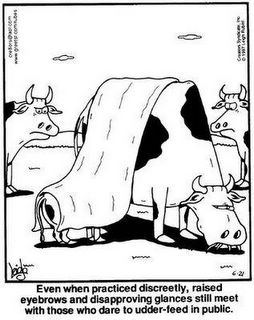
In Search of the Perfect Peach
I just finished licking the peach juice off my fingers of the most indescribably delicious and delectable peach I have eaten in the past ten years. It was brought to me in a basket with three other peaches with instructions given to the bearer that they were to be delivered to me and me alone. These peaches came ripe off the tree of the brother of my next door neighbor, who generously wanted to share this rare booty with me. Why rare? Most fruits and veggies are picked before they are ripe and before all the normal phytochemicals are in them. This accounts for much of the tastelessness of most of the produce we are forced to eat thanks to modern agricultural methods.
How I wish that all our fruits and vegetables were allowed to ripen the good old fashioned way. Maybe our kids would want to eat them then.
I just finished licking the peach juice off my fingers of the most indescribably delicious and delectable peach I have eaten in the past ten years. It was brought to me in a basket with three other peaches with instructions given to the bearer that they were to be delivered to me and me alone. These peaches came ripe off the tree of the brother of my next door neighbor, who generously wanted to share this rare booty with me. Why rare? Most fruits and veggies are picked before they are ripe and before all the normal phytochemicals are in them. This accounts for much of the tastelessness of most of the produce we are forced to eat thanks to modern agricultural methods.
How I wish that all our fruits and vegetables were allowed to ripen the good old fashioned way. Maybe our kids would want to eat them then.
In Search of the Perfect Baby
Christians who are in favor of birth control as a form of good stewardship should be aware of the fact that the very same arguments they use as an excuse for limiting their families are the same ones used for aborting them. They should also know that their arguments contribute to the building pressure to abort and destroy "imperfect" babies in the name of "good stewardship." Just because we can do something is no argument for deciding whether or not we should do it.
Will someone please tell these clowns that life is terminal? No one (with only two notable exceptions that I can think of) gets out of it alive. The possibilities of pain, disease, disability, imminent death, economic hardship, and the stunting of parental aspirations and self development are not sufficient argument for denying anyone the chance of life.
Christians who are in favor of birth control as a form of good stewardship should be aware of the fact that the very same arguments they use as an excuse for limiting their families are the same ones used for aborting them. They should also know that their arguments contribute to the building pressure to abort and destroy "imperfect" babies in the name of "good stewardship." Just because we can do something is no argument for deciding whether or not we should do it.
Families with a history of cancers and other inherited diseases may soon be able to ensure their babies do not have the genes responsible by opting for IVF instead of natural conception.
Fertility regulators are considering whether to widen the rules which already allow parents to ensure babies are not born with faulty genes that will inevitably lead to conditions such as cystic fibrosis and Huntington's disease.
This would enable clinics to offer parents the opportunity to prevent their offspring inheriting genes for conditions that may develop later in life, even though not all people with the genes will ever get the disease.
The move is likely to prompts ethical debate for two reasons. First, it might encourage families with no history of fertility problems despite other family health problems to seek IVF. Secondly, it would mean the destruction of embryos capable of forming life with no guarantee that genes they carried would be responsible to later disease.
Will someone please tell these clowns that life is terminal? No one (with only two notable exceptions that I can think of) gets out of it alive. The possibilities of pain, disease, disability, imminent death, economic hardship, and the stunting of parental aspirations and self development are not sufficient argument for denying anyone the chance of life.
Friday, August 12, 2005
My Kids Are Tops
This weekend is the local agricultural fair complete with horses, pigs, goats, sheep, chickens, cows, and other farm type animals. Both Hannah and Ben have their goats and pigs entered in the 4H projects. Hannah won Grand Championship in Goat showmanship and her goat was the Grand Champion goat. Ben got Reserved Champion goat.
When it comes to swine, all of Ben's vast experience in keeping his bedroom in the condition of a pig stye has paid off handsomely. His pig won Grand Champion pig, and Ben won the Grand Champion swineherd ribbon as well. Not sure how Hannah did on that one. Probably not as well since she tends to be neater. One of the competitor's pig didn't do so hot. She had trained it to expect a good scratch all over every time she touched it with a stick. So instead of doing what a pig is supposed to do in these competitions, it would invariably lay down and practically roll over begging to be scratched, almost like a dog would.
Rumor has it that Sam has won second place with his rabbit. We'll see if rumor was correct when I pick them up in a little while.
This weekend is the local agricultural fair complete with horses, pigs, goats, sheep, chickens, cows, and other farm type animals. Both Hannah and Ben have their goats and pigs entered in the 4H projects. Hannah won Grand Championship in Goat showmanship and her goat was the Grand Champion goat. Ben got Reserved Champion goat.
When it comes to swine, all of Ben's vast experience in keeping his bedroom in the condition of a pig stye has paid off handsomely. His pig won Grand Champion pig, and Ben won the Grand Champion swineherd ribbon as well. Not sure how Hannah did on that one. Probably not as well since she tends to be neater. One of the competitor's pig didn't do so hot. She had trained it to expect a good scratch all over every time she touched it with a stick. So instead of doing what a pig is supposed to do in these competitions, it would invariably lay down and practically roll over begging to be scratched, almost like a dog would.
Rumor has it that Sam has won second place with his rabbit. We'll see if rumor was correct when I pick them up in a little while.
Tuesday, August 09, 2005
August Book Finds
Yesterday I went to Value Village and perused the book aisles. Their books cost more money than those I find at the St. Vincent de Paul thrift store, but I generally can find some books that I would really like to own. Here is a partial list of what I found:
The Heart's Code by Dr. Paul Pearsall. If you are interested in the discipline of psychoneuroimmunology , or how the emotional/psychological aspect of human life can influence the health and function of the body, then this is one book you will want to read. It contains an authoritative and comprehensive summary of some of the important scientific findings related to the emotions and cellular memory. I read this book a few years ago and it contains stories about heart transplant recipients who took on some of the traits and preferences of their heart's donor. Most people don't realize this, but their hearts have a "brain" in them that has something in the order of 80 million neurons which is as much as some parts of the cerebral brain contains. This brain in the heart is capable of storing information as well as transmitting it to the head and in some experiments has even over-ridden the head's instructions. Ever have the experience of knowing something "in your heart?" It kind of sheds an interesting light on some of the Scriptural instructions to guard our hearts, etc., at least for me.
The G-Index Diet by Richard N. Podell, M.D., F.A.C.P This is a "diet" book based on the use of the glycemic index, which is an approach to eating that I advocate and need to implement more consistently. I am going to be using this approach and starting back to the gym tout de suite et maintenant, s'il vous plait! If you don't know about the glycemic index, this is an index that tells you how fast a particular food breaks down into blood sugar. The lower on the index something is, the slower it breaks down to sugar and the slower and less of a rise in insulin levels your body experiences. Since you are producing less levels of insulin, you are also giving your body less of a signal to store food energy as fat instead of burning it for energy. Get it?
How to Have a Smarter Baby: The Infant Stimulation Program for Enhancing Your Baby's Natural Development by Dr. Susan Ludington-Hoe. This isn't so much for Sweet Baby James as it is for my own information and use with children I see in my practice. But if James benefits, so much the better. I would get this book and read it even if I didn't have James because it contains information in an area I am really interested in -- how to stimulate brain growth. Some of this information may still be applicable to older children and even adults, given the plastic nature of the brain.
The Experience of Childbirth by Sheila Kitzinger Anything by Sheila Kitzinger on the topic of childbirth is worth reading and should be read by expectant parents. It is sad the way that birth has been medicalized in North America into a disaster just waiting to happen and has been co-opted by a system concerned primarily with disease and things that go wrong. Sheila helps you to see things the way they should be. I am collecting her books when I find them to pass on to my daughters.
More Alike Than Different by Lee Bussard This book was written by a man who is disabled and I picked it up because I am appalling ignorant about the lives of disabled people and want to know more.
A Treasury of Handmade Gifts by Kate Yeates I always have this dream of sitting down and doing some arts and crafts with my girls. Maybe this book will help me to actually do it.
Winnie the Pooh by A.A. Milne This is a read aloud for Garnet and Elodie.
A Wrinkle in Time by Madeleine L'Engle.
Harvard Classics -- These are some of those nicely bound hard covers of classic authors that are dark green in color and embossed with gold. I picked up one which contained works by Bunyan, Izaak, and Walton and another with works by Ben Franklin, Woolman and Penn.
There were a few others, but this is all I feel like commenting on for now.
Yesterday I went to Value Village and perused the book aisles. Their books cost more money than those I find at the St. Vincent de Paul thrift store, but I generally can find some books that I would really like to own. Here is a partial list of what I found:
The Heart's Code by Dr. Paul Pearsall. If you are interested in the discipline of psychoneuroimmunology , or how the emotional/psychological aspect of human life can influence the health and function of the body, then this is one book you will want to read. It contains an authoritative and comprehensive summary of some of the important scientific findings related to the emotions and cellular memory. I read this book a few years ago and it contains stories about heart transplant recipients who took on some of the traits and preferences of their heart's donor. Most people don't realize this, but their hearts have a "brain" in them that has something in the order of 80 million neurons which is as much as some parts of the cerebral brain contains. This brain in the heart is capable of storing information as well as transmitting it to the head and in some experiments has even over-ridden the head's instructions. Ever have the experience of knowing something "in your heart?" It kind of sheds an interesting light on some of the Scriptural instructions to guard our hearts, etc., at least for me.
The G-Index Diet by Richard N. Podell, M.D., F.A.C.P This is a "diet" book based on the use of the glycemic index, which is an approach to eating that I advocate and need to implement more consistently. I am going to be using this approach and starting back to the gym tout de suite et maintenant, s'il vous plait! If you don't know about the glycemic index, this is an index that tells you how fast a particular food breaks down into blood sugar. The lower on the index something is, the slower it breaks down to sugar and the slower and less of a rise in insulin levels your body experiences. Since you are producing less levels of insulin, you are also giving your body less of a signal to store food energy as fat instead of burning it for energy. Get it?
How to Have a Smarter Baby: The Infant Stimulation Program for Enhancing Your Baby's Natural Development by Dr. Susan Ludington-Hoe. This isn't so much for Sweet Baby James as it is for my own information and use with children I see in my practice. But if James benefits, so much the better. I would get this book and read it even if I didn't have James because it contains information in an area I am really interested in -- how to stimulate brain growth. Some of this information may still be applicable to older children and even adults, given the plastic nature of the brain.
The Experience of Childbirth by Sheila Kitzinger Anything by Sheila Kitzinger on the topic of childbirth is worth reading and should be read by expectant parents. It is sad the way that birth has been medicalized in North America into a disaster just waiting to happen and has been co-opted by a system concerned primarily with disease and things that go wrong. Sheila helps you to see things the way they should be. I am collecting her books when I find them to pass on to my daughters.
More Alike Than Different by Lee Bussard This book was written by a man who is disabled and I picked it up because I am appalling ignorant about the lives of disabled people and want to know more.
A Treasury of Handmade Gifts by Kate Yeates I always have this dream of sitting down and doing some arts and crafts with my girls. Maybe this book will help me to actually do it.
Winnie the Pooh by A.A. Milne This is a read aloud for Garnet and Elodie.
A Wrinkle in Time by Madeleine L'Engle.
Harvard Classics -- These are some of those nicely bound hard covers of classic authors that are dark green in color and embossed with gold. I picked up one which contained works by Bunyan, Izaak, and Walton and another with works by Ben Franklin, Woolman and Penn.
There were a few others, but this is all I feel like commenting on for now.
Monday, August 08, 2005




An August Evening Musing
I haven't felt much like blogging or being on the net lately. Part of the reason is that life has been very full in recent days and there just hasn't been the time. But tonight I feel like writing for no particular reason other than the peculiar kind of pressure in my chest that requires this sort of an outlet to relieve it.
It has been over eight weeks since James made his debut. At present he is laying on a nursing pillow on my lap, gazing up at me as though life held nothing finer than laying in his mother's arms. Was there life before James? It is hard to remember. It feels like he has always been a part of me.
I love this part of childrearing. For a short time, the sun and moon set by me and all that is needed for happiness to be complete is a full belly of mama milk and a constant cuddle. Already his little hands reach for me at night and if I am not found he awakens. If happiness consists in being needed, then my cup is full.
At the other extreme, I am letting go of another son. He didn't realize it when he left home that I was quite prepared to set him free in due time. I didn't realize that due time would come so soon is all. And now it has been over four weeks since I have heard from him or seen him. He doesn't call. He doesn't come to church. We are a noisy bunch when we get together and he has gotten used to quietness and was stressed out by us the last time all the children were together.
Leaving and cleaving is something that all young men are called upon to do and I have never aspired to the role of "smother mother." I know my time with him is over and it is time for him to sift through what he has been taught and take ownership of it for himself. I also know that he is just as much under the eye of God now than he ever was. But letting go still remains hard to do and the silence is hard to endure.
Almost as hard to endure is watching yet another son struggle with life. All of us are feeling an emotional letdown after our time of fellowship with the brethren in Edmonton. I can't help thinking there is more to this than mere anticlimax. Counsel is offered, and hugs are supplied. Signs of grace are there, but the conflict of learning to subdue and mortify the flesh can sometimes overwhelm. I remember my own struggles in this regard. All one can do is stand on the sideline and watch and shout encouragement to him and pray that the Lord will keep one which I have committed to Him.
Summer is almost over. The lazy days of relaxation never did materialize. I did do some homeschooling, but that has fallen by the wayside as other activities took over. Last week was devoted to travel and visiting. We also had a large barbeque party at our home on Saturday for business associates and customers in our business. Sunday was devoted to fellowshipping over a meal after worship. Today I went to have my hips adjusted by the chiropracter and then spent the afternoon trying to find some suitable clothing for Hannah to wear to the agricultural fair that is being held this week. She is going to be showing a pig and a goat as part of her 4H projects and needed black jeans and a white shirt to do it in. Every day this week will see me up before the crack of dawn to take the kids to the fairground and then back again in the evening to pick them up.
Next week I am planning on taking the kids to Barkerville. This will be both a fun and an educational day for them. We will pack a picnic lunch and the digital camera and take pictures of all the buildings, get brochures, and make notes on the history of this gold rush mining town in the heart of the Cariboo Mountains. The results of this project will be turned into something they can use for their social studies work for school. At some point I plan to get back to work on their plant unit study this month as well.
I sat down this afternoon and made a list of projects I need to complete this month before school starts in September. They are, in no particular order:
1) Make up an anti-candida protocol handout complete with guidelines, food suggestions, and recipes.
2) Organize the attic/schoolroom bookshelves. We have new bookshelves and I need to pack some books into them and clean things up.
3) Organize and clean out my closets and get rid of some things and switch over clothing
4) Get the remainder of the school curriculum organized and make up some posters of what our schedule should be.
5) Make a poster of our house rules.
6) Do some reading on my nutritional course from the University of Miami School of Medicine.
I also made a mind map of the things I want to spend my time studying. I recently acquired some materials on how to desensitize the body of allergens using a laser pen set to a specific frequency. I have been experimenting with it and have found that it is also useful for relieving muscular aches and pains. I can literally soften knotted muscles within a few minutes using it. This made it on to the mind map as well as doing more work understanding allergies, particularly in relation to children and the role it has to play with autism and ADD/ADHD and brain disorders. Brain function was on there as well as neurological re-training programs that help to balance brain function and increase mental capacity for children with learning disabilities. I have been speculating about focusing on a particular area of practice and find myself drawn more and more to working with women's and children's health issues. Fortunately, some of the training I have came on DVD's so I can fold laundry as I educate myself.
They say a change is as good as a holiday, but I don't know. I seem to have exchanged one treadmill for another one. I enjoy what I am doing for the most part, but it is taking its toll. I feel exhausted and I am still experiencing post partum bleeding -- a sure sign that I am doing too much. Too bad I find it so hard to follow my own advice.
Well, my scattered flock is back from their various activities just in time for family worship and Laundry Mountain awaits folding. The pressure feels relieved so I guess I'll end this post.
I haven't felt much like blogging or being on the net lately. Part of the reason is that life has been very full in recent days and there just hasn't been the time. But tonight I feel like writing for no particular reason other than the peculiar kind of pressure in my chest that requires this sort of an outlet to relieve it.
It has been over eight weeks since James made his debut. At present he is laying on a nursing pillow on my lap, gazing up at me as though life held nothing finer than laying in his mother's arms. Was there life before James? It is hard to remember. It feels like he has always been a part of me.
I love this part of childrearing. For a short time, the sun and moon set by me and all that is needed for happiness to be complete is a full belly of mama milk and a constant cuddle. Already his little hands reach for me at night and if I am not found he awakens. If happiness consists in being needed, then my cup is full.
At the other extreme, I am letting go of another son. He didn't realize it when he left home that I was quite prepared to set him free in due time. I didn't realize that due time would come so soon is all. And now it has been over four weeks since I have heard from him or seen him. He doesn't call. He doesn't come to church. We are a noisy bunch when we get together and he has gotten used to quietness and was stressed out by us the last time all the children were together.
Leaving and cleaving is something that all young men are called upon to do and I have never aspired to the role of "smother mother." I know my time with him is over and it is time for him to sift through what he has been taught and take ownership of it for himself. I also know that he is just as much under the eye of God now than he ever was. But letting go still remains hard to do and the silence is hard to endure.
Almost as hard to endure is watching yet another son struggle with life. All of us are feeling an emotional letdown after our time of fellowship with the brethren in Edmonton. I can't help thinking there is more to this than mere anticlimax. Counsel is offered, and hugs are supplied. Signs of grace are there, but the conflict of learning to subdue and mortify the flesh can sometimes overwhelm. I remember my own struggles in this regard. All one can do is stand on the sideline and watch and shout encouragement to him and pray that the Lord will keep one which I have committed to Him.
Summer is almost over. The lazy days of relaxation never did materialize. I did do some homeschooling, but that has fallen by the wayside as other activities took over. Last week was devoted to travel and visiting. We also had a large barbeque party at our home on Saturday for business associates and customers in our business. Sunday was devoted to fellowshipping over a meal after worship. Today I went to have my hips adjusted by the chiropracter and then spent the afternoon trying to find some suitable clothing for Hannah to wear to the agricultural fair that is being held this week. She is going to be showing a pig and a goat as part of her 4H projects and needed black jeans and a white shirt to do it in. Every day this week will see me up before the crack of dawn to take the kids to the fairground and then back again in the evening to pick them up.
Next week I am planning on taking the kids to Barkerville. This will be both a fun and an educational day for them. We will pack a picnic lunch and the digital camera and take pictures of all the buildings, get brochures, and make notes on the history of this gold rush mining town in the heart of the Cariboo Mountains. The results of this project will be turned into something they can use for their social studies work for school. At some point I plan to get back to work on their plant unit study this month as well.
I sat down this afternoon and made a list of projects I need to complete this month before school starts in September. They are, in no particular order:
1) Make up an anti-candida protocol handout complete with guidelines, food suggestions, and recipes.
2) Organize the attic/schoolroom bookshelves. We have new bookshelves and I need to pack some books into them and clean things up.
3) Organize and clean out my closets and get rid of some things and switch over clothing
4) Get the remainder of the school curriculum organized and make up some posters of what our schedule should be.
5) Make a poster of our house rules.
6) Do some reading on my nutritional course from the University of Miami School of Medicine.
I also made a mind map of the things I want to spend my time studying. I recently acquired some materials on how to desensitize the body of allergens using a laser pen set to a specific frequency. I have been experimenting with it and have found that it is also useful for relieving muscular aches and pains. I can literally soften knotted muscles within a few minutes using it. This made it on to the mind map as well as doing more work understanding allergies, particularly in relation to children and the role it has to play with autism and ADD/ADHD and brain disorders. Brain function was on there as well as neurological re-training programs that help to balance brain function and increase mental capacity for children with learning disabilities. I have been speculating about focusing on a particular area of practice and find myself drawn more and more to working with women's and children's health issues. Fortunately, some of the training I have came on DVD's so I can fold laundry as I educate myself.
They say a change is as good as a holiday, but I don't know. I seem to have exchanged one treadmill for another one. I enjoy what I am doing for the most part, but it is taking its toll. I feel exhausted and I am still experiencing post partum bleeding -- a sure sign that I am doing too much. Too bad I find it so hard to follow my own advice.
Well, my scattered flock is back from their various activities just in time for family worship and Laundry Mountain awaits folding. The pressure feels relieved so I guess I'll end this post.
Thursday, August 04, 2005
Covenanter Conventicle
Why the long silence? I just spent a wonderful five days driving to and from Edmonton with the days in between spent fellowshipping with brothers and sisters in the Lord. It has taken me a few days to catch up on laundry and sleep and I am still running somewhat behind.
I think the highlight of the entire weekend was our worship service. We came in and sat down and I looked around me during the service and felt overcome by love of my brothers and sisters in Christ. It is always good to spend time with the Lord's people no matter where they may be found, but the delight is sharpest and sweetest when you are with those of like mind and heart. To sing psalms together, to sit at the Lord's Table communing with Him and with each other, to see my son admitted to the Visible Church were but a foretaste of Heaven's delights. What joy awaits us when we are all gathered together before the Lord, only this time with no presence of sin to divide us from each other and from our loved ones who own Christ but not our covenants.
I do have some regrets -- the weekend flew by so fast and there were so many wonderful people to meet and get to know, that I never did get to spend the time with each of them that I would have liked to. I regret that some friends I have known well and loved now live far away. In at least one instance I was overcome by tears upon seeing a well loved face that I hadn't seen for a while. The regrets were more than made up for by all the benefits however. My family was billeted in the same home as my beloved pastor, Greg Price, and his wife, Lovely Lonna. He is a man with a true shepherd's heart for God's flock and he never fails to endear himself to me or my family when we are with him. I count him one of the greatest of God's mercies to me as there isn't a week that goes by when I am not challenged, encouraged, edified, rebuked, and uplifted by his sermons.
I regret that I allowed some to take pictures of me. I look like such a COW in my overalls! Oh well. Next time I will move faster and confiscate the cameras.
James seemed to be a hit. If it weren't for the fact that he needed the occasional diaper change and feeding, I wouldn't have seen him all weekend. Some of the younger girls did a wonderful job in packing him around everywhere. I would feed James and then look up and find one of them hovering close by waiting to snatch and run. Their tender care enabled me to visit with others more freely. James now feels that being held and snuggled all day and night and repeatedly told how sweet and cute he is, is his due and it took an entire day of forcible confinement in his car seat with only occasional breaks as we drove home to convince him otherwise.
It was brought to my attention what a little wiseacre my son Garnet has become. Garnet will be six later this month. Pastor Price, as is his endearing custom when speaking to younger children, called Garnet "honey." Garnet promptly informed him he was a BOY and NOT a honey. A little while later when Garnet was on his way to bed, Pastor Price teased him by saying, "Goodnight, Honey!" Garnet stopped in his tracks, turned around and silently regarded him for a moment before replying, "Goodnight, Babe" and then headed down to his bed. He also informed me that he has four "chicks." When I expressed puzzlement over what in the world he could be talking about, he named four of the teen girls there. Mothers take note and guard your daughters. I can see I am going to have an interesting time with him when he is older.
So now it is over and I am suffering a slight emotional let down. The good times had to come to an end, but, Lord willing, there is always next year.
Why the long silence? I just spent a wonderful five days driving to and from Edmonton with the days in between spent fellowshipping with brothers and sisters in the Lord. It has taken me a few days to catch up on laundry and sleep and I am still running somewhat behind.
I think the highlight of the entire weekend was our worship service. We came in and sat down and I looked around me during the service and felt overcome by love of my brothers and sisters in Christ. It is always good to spend time with the Lord's people no matter where they may be found, but the delight is sharpest and sweetest when you are with those of like mind and heart. To sing psalms together, to sit at the Lord's Table communing with Him and with each other, to see my son admitted to the Visible Church were but a foretaste of Heaven's delights. What joy awaits us when we are all gathered together before the Lord, only this time with no presence of sin to divide us from each other and from our loved ones who own Christ but not our covenants.
I do have some regrets -- the weekend flew by so fast and there were so many wonderful people to meet and get to know, that I never did get to spend the time with each of them that I would have liked to. I regret that some friends I have known well and loved now live far away. In at least one instance I was overcome by tears upon seeing a well loved face that I hadn't seen for a while. The regrets were more than made up for by all the benefits however. My family was billeted in the same home as my beloved pastor, Greg Price, and his wife, Lovely Lonna. He is a man with a true shepherd's heart for God's flock and he never fails to endear himself to me or my family when we are with him. I count him one of the greatest of God's mercies to me as there isn't a week that goes by when I am not challenged, encouraged, edified, rebuked, and uplifted by his sermons.
I regret that I allowed some to take pictures of me. I look like such a COW in my overalls! Oh well. Next time I will move faster and confiscate the cameras.
James seemed to be a hit. If it weren't for the fact that he needed the occasional diaper change and feeding, I wouldn't have seen him all weekend. Some of the younger girls did a wonderful job in packing him around everywhere. I would feed James and then look up and find one of them hovering close by waiting to snatch and run. Their tender care enabled me to visit with others more freely. James now feels that being held and snuggled all day and night and repeatedly told how sweet and cute he is, is his due and it took an entire day of forcible confinement in his car seat with only occasional breaks as we drove home to convince him otherwise.
It was brought to my attention what a little wiseacre my son Garnet has become. Garnet will be six later this month. Pastor Price, as is his endearing custom when speaking to younger children, called Garnet "honey." Garnet promptly informed him he was a BOY and NOT a honey. A little while later when Garnet was on his way to bed, Pastor Price teased him by saying, "Goodnight, Honey!" Garnet stopped in his tracks, turned around and silently regarded him for a moment before replying, "Goodnight, Babe" and then headed down to his bed. He also informed me that he has four "chicks." When I expressed puzzlement over what in the world he could be talking about, he named four of the teen girls there. Mothers take note and guard your daughters. I can see I am going to have an interesting time with him when he is older.
So now it is over and I am suffering a slight emotional let down. The good times had to come to an end, but, Lord willing, there is always next year.
Subscribe to:
Posts (Atom)